A Chinese court has ordered two men who cracked an unreleased Honkai: Star Rail test build to pay 1 million yuan in damages, and HoYoverse says the ruling is now final.
The decision, announced by miHoYo's legal department on October 28, treats unreleased test content as a protected trade secret rather than a spoiler problem. Defendants Yang and Guo were ordered to stop infringing immediately, publish a statement in designated channels to limit the damage, and jointly cover 1 million yuan in economic losses plus enforcement costs. The case is the clearest signal yet that datamining in China now carries a six-figure price tag .
A QQ channel was where this case started
Yang ran a QQ channel called "Coffee Forest."
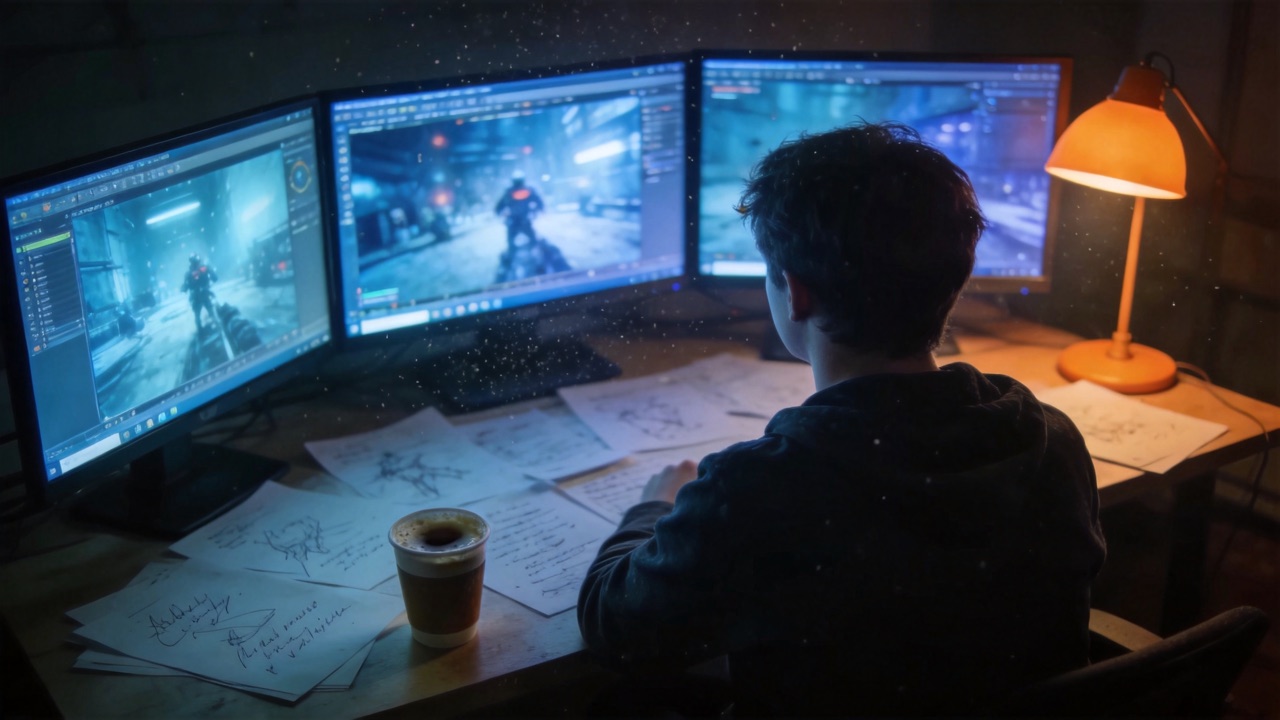
His routine was straightforward: post software test packages for unreleased Honkai: Star Rail builds, then attach a tutorial. Follow the tutorial, download the package, set up the environment, and you were playing content the studio had not shipped yet. This was not gossip. It was a reproducible pipeline with steps.
Guo took a different route. He repeatedly obtained the test build through improper means and unpacked it, extracting unreleased characters, skill data and in-game footage, then publishing the results at volume.
miHoYo's legal team found both operations during routine monitoring, filed suit, and applied for an interim conduct injunction while the case proceeded. The October 28 notice is the result of that sequence.
The court ruled on trade secrets, not on spoilers
The easiest way to misread this story is to treat it as a publisher refusing to let players know what is in the next banner.
The legal reasoning is more mundane. A test build is not a public asset. The unreleased characters, skill sets and gameplay footage inside it are content assets built with real money. Obtaining that build through improper means, cracking it, and publishing the contents is misappropriation of trade secrets, not information sharing.
The judgment carried three components: stop the infringement, publish a statement to mitigate the impact, and pay 1 million yuan jointly. All three matter. Deleting posts without paying, or paying without correcting the record, would not have produced an enforceable precedent.
The injunction landed one day before the version update
One detail in the notice deserves its own section: the court issued its interim conduct injunction exactly one day before the game's version update, effective on delivery of the ruling.
That timing is not a coincidence. Leaked content has a shelf life measured in hours. Once a version ships, "unreleased" stops meaning anything and the leak's value drops to zero. Before a version ships, however, early character reveals and gameplay clips disrupt pre-registrations, banner pacing and an entire marketing cycle.
Japanese media framed the same case more sharply. AUTOMATON reported on October 30 that the defendant did not merely obtain unreleased test data but distributed the installation method as well, and was ordered to pay roughly 24 million yen. In Chinese communities this economy is called "neige" — insider leaking. Japanese coverage used a blunter term: malicious conduct.
Why the leaking economy keeps regenerating
Traffic is the fuel, reposting is free
The incentive structure explains it better than any technical barrier.
A single exclusive character leak can pull tens of thousands of views and a wall of gratitude in a community channel. Reposting costs nothing. Producing the original — cracking the build, configuring the environment, writing the tutorial — costs one computer and a few sleepless nights. Supply chases traffic; demand is driven by anxiety. Players worry about pulling the wrong banner, building the wrong character, missing an event window.
Platform gaps keep distribution cheap
Platform gaps make distribution trivial: QQ channels, group file shares, cloud drive mirrors, screenshot re-uploads. One leak can change shells a dozen times in a few hours. Enforcement usually lands on whichever link in the chain is easiest to identify.
What makes this ruling consequential is precisely that: liability landed on named individuals, was joint and several, and is final.
To stay updated on the latest developments and case progress from these companies, the industry news section of GameHub will present official announcements alongside subsequent rulings for your reference.
Is 1 million yuan the right number?
What the counterargument actually says
Start with the counterargument. Some players will say they only want to know which character is coming next, and that official previews give too little. Others worry that heavier penalties give publishers a reason to disclose even less.
Both concerns are legitimate, and neither collides with this ruling. Official previews, version livestreams and patch notes are the legitimate channel for knowing what is coming; players can and should push studios to make those clearer and earlier. Content pulled out of a cracked test build is a different category entirely.
On cost: 1 million yuan is a severe hit for two individuals, but measured against a single version's marketing spend, or against pre-registration losses caused by an early reveal, it is not especially high. The real value of the ruling is certainty. It tells everyone still running this business that the risk can now be quantified.
My take: players deserve transparency, not stolen builds
I do not have much sympathy for the defendants.
Not out of deference to publishers, but because this supply chain makes things worse for everyone who plays. Every major leak pushes studios toward more conservative previews, which means less public information, which means community knowledge gets worse, not better. It functions as a tax on the information environment.
I also reject the reaction that says players should simply stop asking. Questions about banner schedules, character strength and patch cadence are reasonable. Studios should answer them clearly and early. The healthy arrangement is one where official communication is good enough that nobody needs a cracked build to decide how to spend.
For this specific case, three facts do the work: 1 million yuan, joint liability, and a final judgment. That combination is worth more than any number of strongly worded statements.
Will you keep following leak accounts?
Tell us in the comments: what was the leak you followed most obsessively, and did it turn out to be true?
FAQ
How much was awarded, and to whom?
The court awarded miHoYo 1 million yuan, jointly owed by defendants Yang and Guo, covering economic losses and enforcement costs. Both were also ordered to stop infringing and publish a corrective statement. The judgment is final.
Can ordinary players be pursued for reposting leaks?
This case targeted the two people who obtained the build, cracked it, and published both the content and an installation tutorial. Passing along a single screenshot is not the fact pattern here. Distributing the cracked package or the setup guide moves much closer to it — publishing the tutorial was a central element of this ruling.
What separates an official preview from a leak?
An official preview is content the studio chooses to publish: characters, mechanics, event details, verifiable at source. A leak comes from a cracked, unreleased test build and constitutes trade secret infringement. Players can press studios to make previews more detailed. They cannot treat a cracked build as a substitute for one.
Related News
- GTA 6 Crashes Netflix: 89% of Pre-Orders Are for the $100 Edition, and the Entire Industry Is Steering Clear
- Tencent Updates on Two Titles: Valorant Hits 100M Registered Users in China, Monster Hunter Outlanders Launches Globally
- Microsoft Offers Buyouts to 60,000 Staff While Xbox Reportedly Draws a $150bn Price Tag