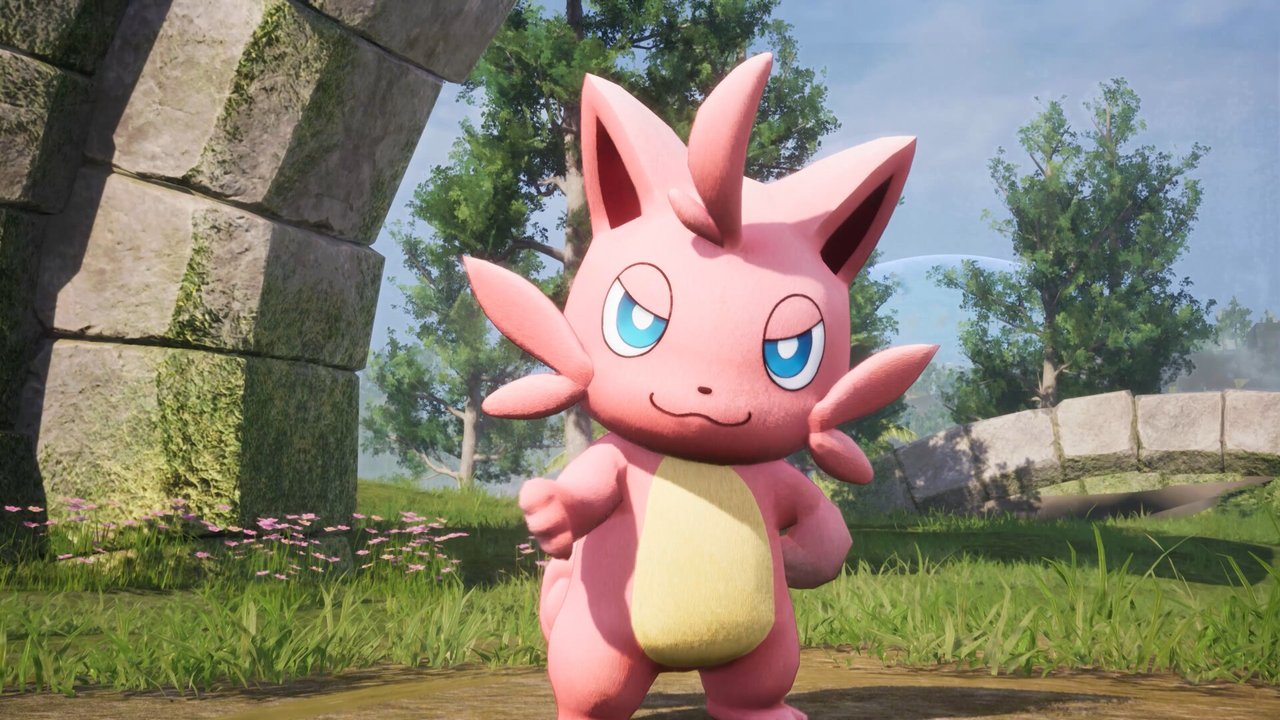
On November 26, Ruyi Jingxiu, the games arm of China Ruyi, confirmed it has secured mainland China publishing rights for Palworld Mobile. The developer is not Pocketpair: it is PUBG Studios, the Krafton-owned team behind PlayerUnknown's Battlegrounds. Why does a publishing deal deserve its own story? Because what changed hands here is not a single product. It is a set of IP surfaces that have barely been used yet.
Who builds it, who ships it
The split is clean. Pocketpair owns the IP, PUBG Studios builds the mobile version, and Ruyi Jingxiu handles localization and long-term publishing in mainland China. (Source: Game Daily, 2026-11-26)
This was not improvised. The mobile build debuted at G-STAR 2025 and later ran closed tests in Korea and Japan, where overseas coverage praised how closely it reproduced the original's core loop while adapting social systems for touch.
Steam's official data shows the base it is inheriting. Version 1.0 shipped on July 9, 2026, developed and published by Pocketpair, priced around S$26, Windows only. (Source: Steam appdetails API, appid 1623730, checked 2026-11-27)
Where 40 million players come from
Palworld has drawn more than 40 million players since launch, and the 1.0 release in 2026 pushed Steam concurrent players past 960,000. (Source: official figures cited by Game Daily, 2026-11-26)
Put 960,000 in context. It means a single version update can shove a buy-to-play survival-crafting game back into the platform's top tier. Pocketpair has already proven that path once; the mobile version only has to prove it on a different screen.
The same day as the publishing news, Pocketpair's official channel announced a Palworld and Dune: Awakening Steam bundle. Scroll back and you find a Graveyard Keeper 2 bundle on October 28, a RuneScape: Dragonwilds bundle on September 25, and the last content patch, v1.0.5, on September 15. (Source: Steam ISteamNews API, official Community Announcements only, checked 2026-11-27)
One IP selling bundles, trading cards and mobile publishing rights at the same time tells you where Pocketpair's center of gravity sits: not in making another game, but in running an asset. That is good news for a publishing partner, and pressure too.
Ruyi's math: not buying a hit, buying a reusable IP
Ruyi Jingxiu started in 2022 with a strategy-game base: Red Alert Online, World of Empires, Galaxy Era. This deal moves it into open-world creature collecting and survival-crafting, a genre it has never operated.
The real differentiation sits at group level. In June, Time Card Collection, a unit under China Ruyi's cinema "super entertainment space" strategy, took exclusive mainland rights to the Palworld trading card game. The parent company owns film and TV production, cinema circuits and merchandise.
Mobile, cards and cinemas, all sharing one IP. That is the pricing logic here: not a bet on one game's revenue, but on a chain that can be monetized repeatedly.
Risks and verdict: a crowded genre, a cross-border build
Risk: survival-crafting is already crowded, and cross-organization work is the variable
China's survival-crafting market is not empty. The creature-collecting plus base-building combination has been worked over by several titles in the past two years, and players have little patience for a straight Palworld clone.
The bigger variable is organizational. Development sits in Korea, publishing in China, with localization, patch cadence and event approval running through three layers. For a high-freedom sandbox, localization is not translation. It is a trade-off between content compliance and gameplay cuts.
One number is also easy to misread: 40 million is a global cumulative player count, not a Chinese mobile audience. The mobile game has to acquire users from zero rather than migrate an existing base.
Verdict: half of this deal's value is not in the game
If you only look at mobile revenue, Ruyi Jingxiu is fighting for a mid-table slot in a crowded genre. Add cards, cinemas and merchandise, and the logic lines up: mobile drives acquisition and daily activity, cards drive offline scenes and repeat purchase, cinemas drive brand exposure.
That is what a film company entering games should look like, rather than another publishing agency.
Two things will decide it: how complete the localization is at first test, and whether the card tournaments can actually run inside cinema venues.
FAQ: when can China play Palworld Mobile?
Who publishes Palworld Mobile in China?
Mainland China publishing and operations are handled by Ruyi Jingxiu. Development is by PUBG Studios under Krafton, and the IP belongs to Pocketpair. As of November 27, 2026, no launch date has been announced.
How many players does Palworld have?
Official figures put cumulative players above 40 million worldwide, and the 1.0 release pushed Steam concurrent players past 960,000.
Is the mobile game the same as the PC version?
No. PUBG Studios rebuilt the core loop and social systems for mobile. The PC version is developed by Pocketpair, shipped on Steam on July 9, 2026 and supports Windows only.
What has Ruyi Jingxiu published before?
Mostly strategy games: Red Alert Online, World of Empires and Galaxy Era, operated since 2022, with recent expansion into MMORPG, sports, anime-style and casual titles. When versions or dates move, GameHub updates the record; cross-platform IP deals like this one get their own tracker in our GameHub news section.