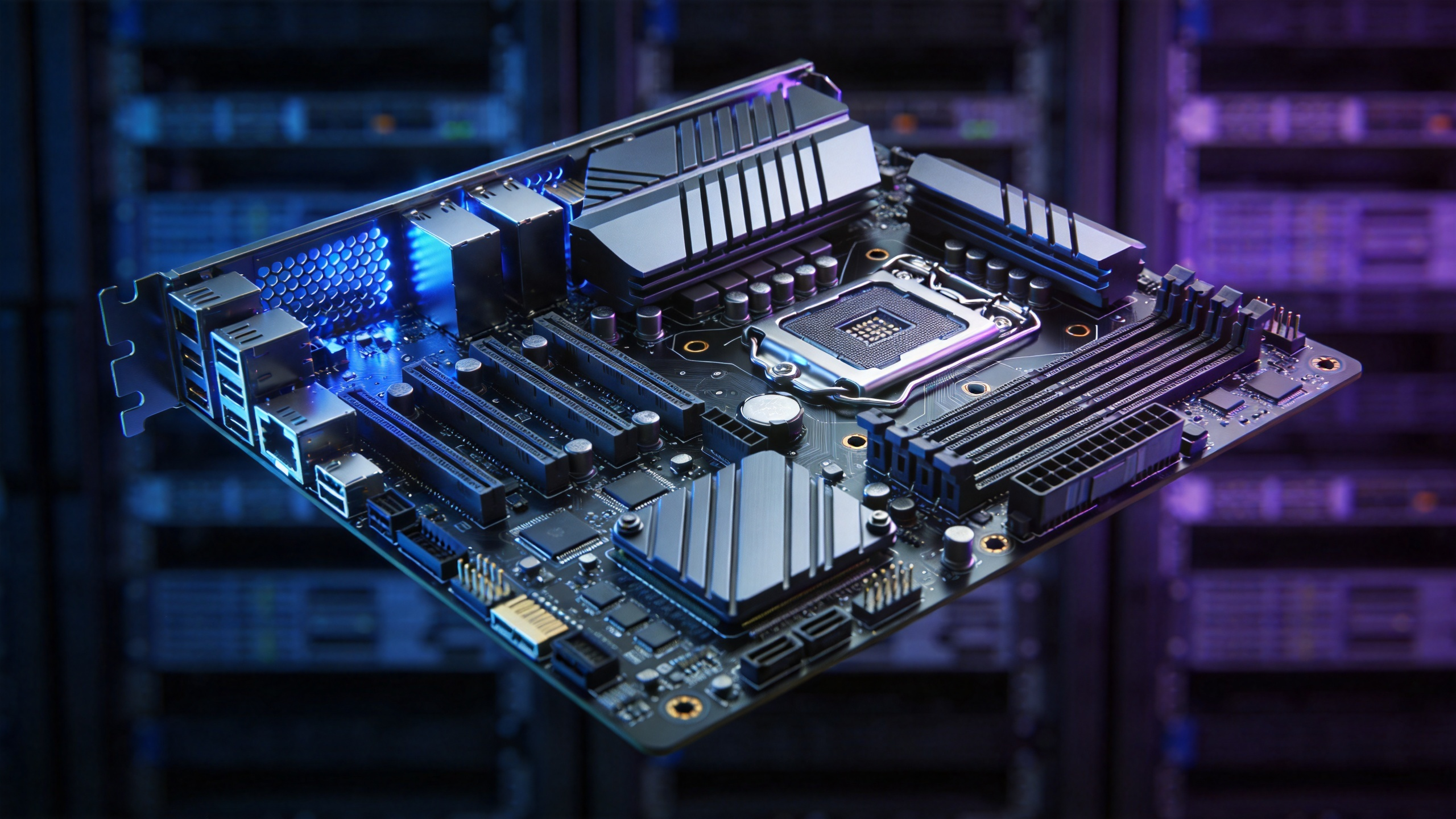
Sony's next console carries more than $680 in RAM and NAND per unit, according to hardware leaker KeplerL2. Add the rest of the bill of materials and the figure approaches $1,000 — before assembly, shipping or retail margin.
Summary: In October 2026, KeplerL2 put PS6's RAM and NAND cost above $680 per console, with total bill-of-materials near $1,000. The same week, Nvidia was reported to have ended RTX 5090 production, routing GB202 silicon to RTX Pro workstation cards. AI data centres are absorbing memory output, pushing game hardware to the back of the queue. Here is the arithmetic, and what it does to console lifespans, used prices and upgrade budgets. Figures verified against public reporting and compiled by the GameHub news desk on 2026-10-19.
Why a PS6 bill of materials now lands near $1,000
KeplerL2 posted the number on NeoGAF: more than $680 of RAM and NAND flash per PS6, roughly £510 or 4,550 yuan. That line item contains no GPU, no mainboard, no cooling, no assembly, no logistics.
His previous estimate put the full bill of materials close to $1,000. Read the two together and the conclusion is blunt: memory alone eats about seventy percent of the console's cost.
The 680-dollar line item
A PS5 Pro already sits near £800 in the UK, and that is a product aimed at enthusiasts. A PS6 above £1,000 leaves the mass market entirely. Sony has said plainly that it will not sell hardware at a loss, which removes the subsidy playbook that carried the last two generations.
Nvidia already blinked: the RTX 5090 is effectively gone
PC hardware is not the escape route. Reports this week said Nvidia has allocated GB202 output to RTX Pro workstation cards, leaving the RTX 5090 effectively discontinued. The card launched at $1,999; street prices have sat north of $5,000 for a year.
The entry tier is slipping too. KeplerL2 expects RTX 6060 to arrive as late as 2029, possibly without matching the next console generation. When supply tightens, vendors protect the high end first.
The knock-on effect: a longer console generation, on hardware you already own
The first consequence is not higher prices. It is an extended current generation.
Sony has shipped more than 95 million PS5s, a number that has stopped climbing but will not shrink. GamesIndustry.biz notes that Sony's profits have decoupled from hardware sell-through: game revenue fell last year while operating income hit a record. Sony has no incentive to force a transition.
Microsoft has the opposite problem. Xbox needs a new generation to roll the dice again; Project Helix is rumoured for 2027, but nobody will commit to a date while component costs are this unstable.
Second-hand prices move first
The market is already voting. US consumers paid an average of $597 for a PS5 in the twelve months to August 2026 — well above the official sticker. For most players, the best upgrade over the next two years is not a new box. It is using the one they own until it dies.
The real cause is a bidding war games cannot win
Memory and SSD inflation did not start in games. The AI data-centre buildout pulled demand for HBM, DDR5 and NAND at once, and fab capacity is finite. Whoever pays most gets the wafers.
Console orders run in the low millions of modules. A single hyperscaler contract can absorb that volume in one signature. There is no version of this auction where a $500 box outbids a training cluster.
Data centres can pay the premium; players cannot
The same memory stick earns far more sold into a server rack than into a consumer device. Vendors are not punishing players; they are pricing. That is also why this cycle does not look like previous shortages — demand did not surge, it was simply bought out by a higher-margin industry.
The bear case: a burst AI bubble will not make GPUs cheap next year
The optimistic version says an AI correction collapses memory prices and the hardware crisis dissolves on its own.
I do not buy that timetable. Capacity additions lag by 18 to 24 months, and fabs already under construction do not switch off because orders soften. The likelier path is a year or two of high, flat pricing followed by a slow decline.
The cost nobody counts is delay itself. If the next generation slips to wait for cheaper parts, players are left with an ageing machine and a thinner exclusive slate.
My read: 2027 will bring new consoles, not cheap ones
My expectation is a 2027 launch at $800 to $1,000, positioned around an existing ecosystem rather than a generational leap, selling well below PS5's pace.
What actually changes is industry structure. Hardware stops being the growth engine, and time spent plus software revenue become the only real upside. Whoever holds players on the hardware they already own wins this cycle.
How long can your current console last? If PS6 lands at $1,000, do you buy in or sit it out? Tell us in the comments. More hardware and industry coverage lives at gghubs.com.
FAQ
How much will the PS6 cost?
KeplerL2's leak puts RAM and NAND alone above $680 per unit, with total materials near $1,000. Sony has ruled out selling at a loss, and analyst estimates cluster between $800 and $1,000. No official price exists yet.
Should I buy a PS5 now or wait?
If you do not own one, buying now is cheaper: the US average was $597 over the past year. The next generation will likely cost more and sell out faster at launch.
Will the memory crunch hit phones and handhelds?
Yes. Inflation carries across the whole supply chain, from handhelds to phones to SSDs. The reported 2029 window for RTX 6060 is the clearest example of a low-end product line being sacrificed.