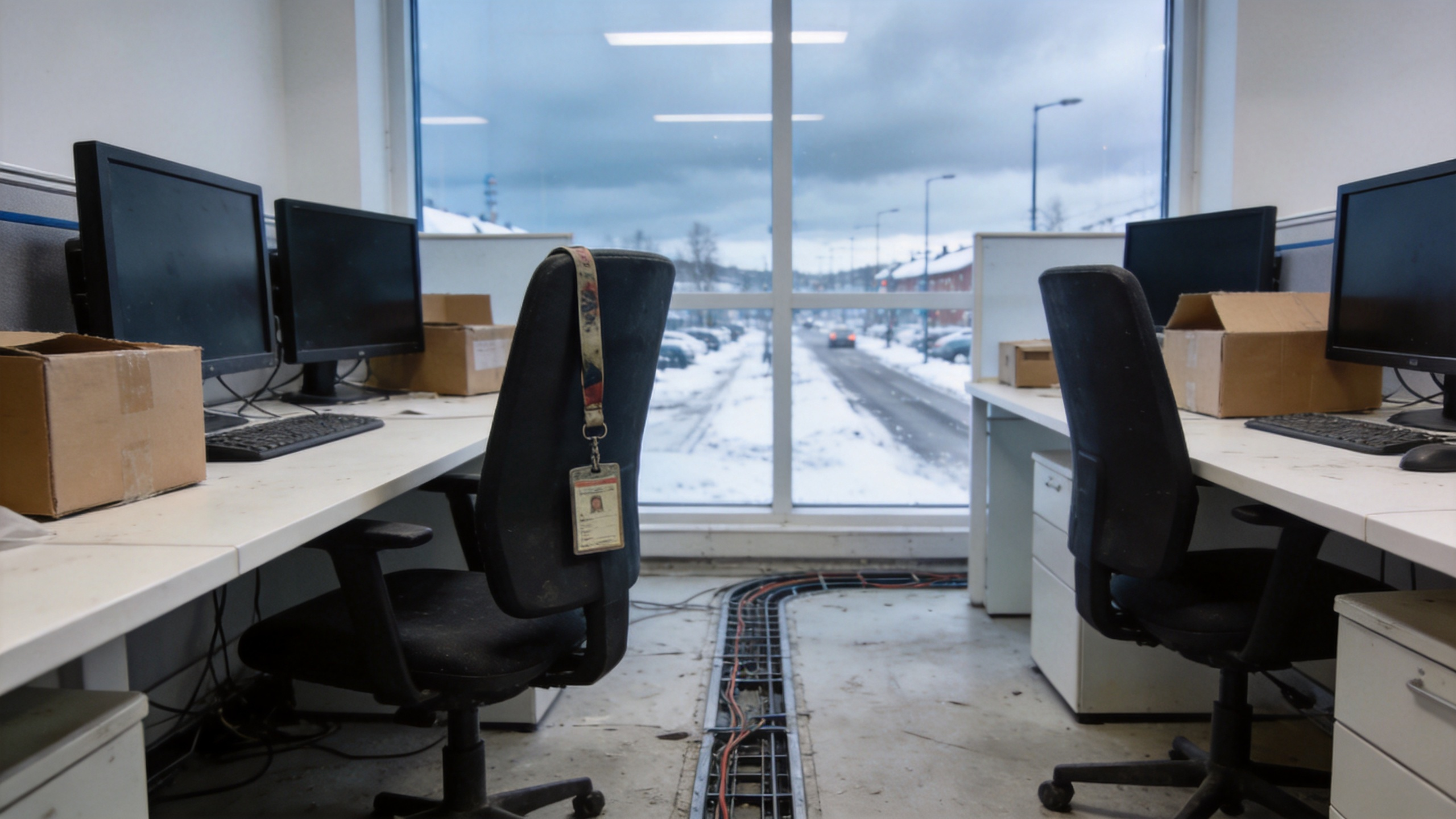
Ubisoft has proposed closing Finnish studio RedLynx, affecting up to 52 positions, and cutting 70 roles at Ubisoft Singapore, roughly a fifth of that studio's headcount. That is 122 jobs in total, described by the company as aligning studios with "upcoming production needs."RedLynx is the birthplace of Trials, acquired in 2011 when the studio was at its commercial peak. Fifteen years later it has no project in development. In the same week, Funcom announced a restructuring and the departure of its CEO. The mid-sized European developer is being hollowed out, one closure at a time.
The announcement was almost quiet
52 roles in Finland, 70 in Singapore
Ubisoft's statement is carefully worded: "Today, we informed our teams of a proposal to close RedLynx in Finland, subject to the local change negotiation process, which would affect up to 52 positions." Singapore got a different framing: 70 positions impacted to align the studio with upcoming production needs, with the studio itself staying open.
Seventy roles is about a fifth of Ubisoft Singapore. Founded in 2008, the studio handled the naval combat sections of Assassin's Creed before leading Skull and Bones, the pirate game that took roughly a decade from reveal to launch in 2024.
RedLynx lasted fifteen years, from Trials to support work
After Trials Fusion, there was nothing of its own
Ubisoft bought RedLynx on the strength of Trials 2 and Trials HD in 2011. Sequels followed, ending with Trials Fusion in 2019, after which the studio shifted into a support role for other teams. It already went through cuts in 2025, when management said it would move from multiplatform work to being "specialised in small screens," with two unannounced mobile titles in development.
Those titles never shipped, according to GamesIndustry.biz. The studio is not currently attached to a project and has no sustainable standalone lineup. That is the structural weakness of a support studio: it generates no revenue of its own, only billable hours inside someone else's project. When a group needs to cut costs, support teams are the first to be asked what they contribute.
Ubisoft has now closed four studios this year
Six games cancelled, six Creative Houses created
In 2026 Ubisoft has closed or proposed closing studios in Stockholm, Halifax, Winnipeg and Belgrade, with the Winnipeg and Belgrade round putting 380 roles at risk. Six games were cancelled along the way.
Organizationally, the company has been split into six Creative Houses, each holding a set of brands and studios. In September, Creative House 2 was renamed Massive Entertainment, the Swedish studio behind The Division. The naming tells you where weight is consolidating. The cost target is €200 million, and that reduction programme entered its "final" stage this year.
Funcom sent the same letter on the same week
A 22-year veteran steps aside
Norway's Funcom said it will focus solely on live operations for Conan Exiles and Dune: Awakening, shrinking the rest of the organization. The number of affected staff was not disclosed. CEO Rui Casais leaves at the end of the year after 22 years at the company, 11 of them running it, including through Tencent's 2020 acquisition. His successor, Scott Junior, is a 25-year veteran who served as executive producer on Dune: Awakening.
Casais put it plainly: "Dune: Awakening has been the biggest project we have ever undertaken. Moving from full production into long-term post-launch development and operations requires a different organization. We cannot sustain the size and structure required during peak development." In other words: the game is finished, so the people who made it are not needed at that scale. Funcom cut staff in October 2025 as well and closed The Outsiders, the studio behind Metal: Hellsinger.
Why the small studios fall first
Layoffs at a large publisher follow a predictable order: support teams, then projects that have not hit a milestone, then the flagship. RedLynx and Ubisoft Singapore sit at the front of that queue, one with no project of its own, the other just off a release that cost the company a great deal of goodwill.
The Creative House structure accelerates it. Resources are allocated by brand, and a support studio loses its identity as part of a specific project, becoming shared overhead. Shared overhead is always first on the cutting list.
The counterargument: this is survival, not collapse
Ubisoft deserves a fair hearing. Its problem was never that it cut too much; it is that it spent a decade spreading too thin, maintaining a dozen franchises that each needed an open world and a multiplayer mode. Without the €200 million reduction, the next round would not be about studios. It would be about the company.
The risk sits on the other side. Layoffs fix a P&L, not a product. Players judge Ubisoft by one metric: whether the next game is any good. If 2027's slate is another annual rotation of Assassin's Creed and Far Cry, the money saved now gets repaid in reputation.
My read: what walked out was judgement
The most expensive loss in a studio closure is not capacity. It is judgement. RedLynx made Trials because it employed people who understood, precisely, why a motorcycle crash should look good. That kind of knowledge does not transfer through documentation, and it does not reappear in a conference room at Massive Entertainment.
The industry phrase of the moment is "focus on core IP." It sounds rational, and in practice it means cutting uncertainty and keeping only guaranteed returns. But new IP grows out of uncertainty, and new IP is exactly what Ubisoft lacks. GameHub 游戏观察 will keep following this thread.
FAQ
How many jobs is Ubisoft cutting?
Up to 52 positions at RedLynx in Finland and 70 at Ubisoft Singapore, for 122 in total. The Finnish figure depends on local change negotiations and could end up lower.
Will there be another Trials game?
There is no project at present. RedLynx moved into a support role after Trials Fusion in 2019, and its two unannounced mobile titles never shipped. Ubisoft owns the IP, so a sequel could be handled by another team.
Is the Skull and Bones team still working?
Ubisoft Singapore remains open with about a fifth of its staff cut. The company says the studio is still an important part of its global production organization and will take on new production work.
Ongoing coverage of release slates and publisher strategy sits at gghubs.com.