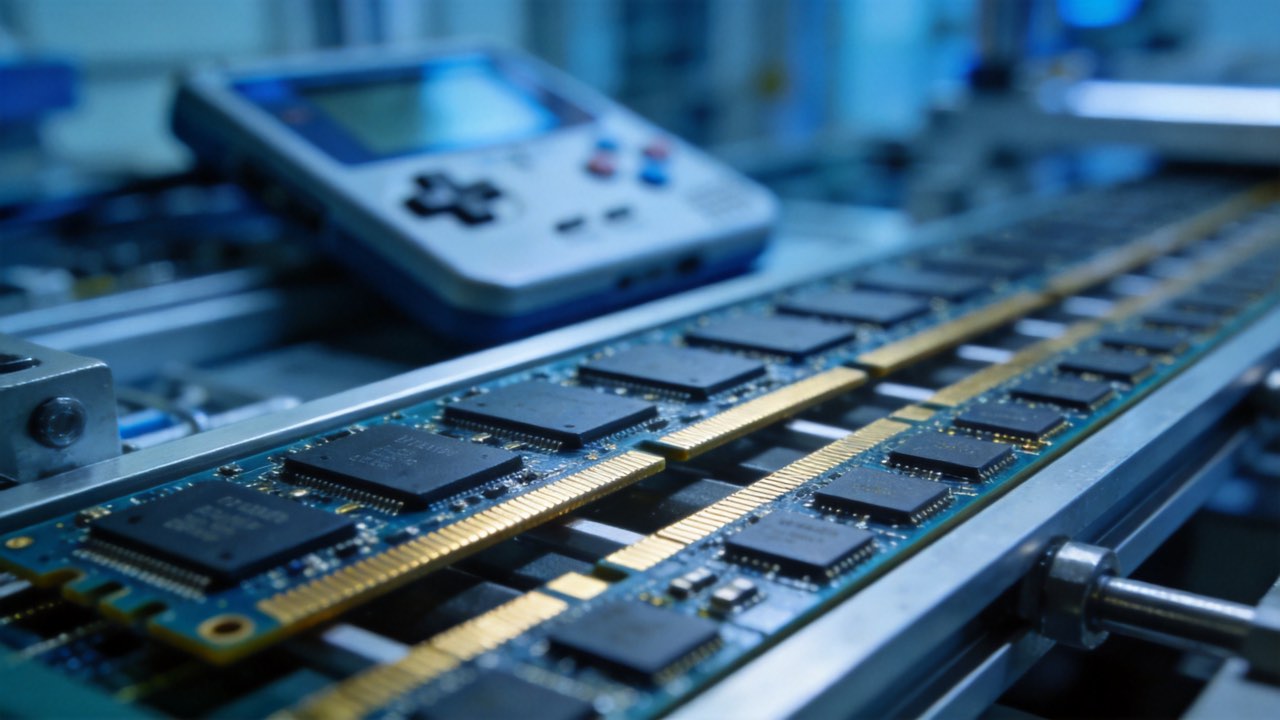
26.35 million. Nintendo's first-half earnings, published November 5, put lifetime Switch 2 sales at 26.35 million units as of September 30, 2026, with Mario Kart World at 16.4 million copies. The same report contains a second set of numbers. Between July and September, Nintendo sold 6.49 million Switch 2 consoles — a **37.4%** decline year over year. A record lifetime total next to a collapsing quarterly rate is not a Nintendo-only problem, and GameHub is tracking the component side of it. It is what happens to console hardware when AI data centers take the memory supply and component prices stop falling.
The Numbers, Side by Side
| Item | Figure | Source |
|---|---|---|
| Switch 2 lifetime sales (to 2026-09-30) | 26.35 million | Nintendo earnings, 2026-11-05 |
| Switch 2 units, Jul–Sep quarter | 6.49 million | Nintendo earnings, 2026-11-06 |
| Year-over-year change | -37.4% | Gamereactor, from earnings data |
| Switch 2 software incl. DLC | 73.2 million copies | RB.RU, from earnings |
| Mario Kart World | 16.4 million copies | Same |
| Original Switch lifetime | 157.20 million | Nintendo earnings |
Reaching 26.35 million in under eighteen months is the fastest pace in Nintendo's history. A 37.4% quarterly drop says something else: the launch upgrade cycle is over, and ordinary demand has to carry the platform from here.
This Is the Second Time Nintendo Has Hit the Brakes
In March 2026, Bloomberg reported that Nintendo had cut its quarterly production plan from six million units to four million — roughly a third — after holiday sales fell short of expectations, particularly in the United States. The reduced rate was expected to continue into April.
At the time, Nintendo's line was that cost was not the reason. Demand had slowed. Internally, the company was reportedly asking whether launch-period inventory had pulled demand forward.
The earnings now close that loop. Demand did not return to launch levels.
Memory Is the Hand on the Scale
The timing is what makes this painful.
AI data centers have absorbed DRAM and HBM capacity, and prices have moved accordingly. Industry reporting puts DRAM price increases at roughly 70% since late 2024. SK Hynix has warned that the structural shortage could run until 2030.
The price hikes already on record
Valve is the clearest marker. When Steam Deck OLED stock returned on May 28, the price went up with it: the 512GB model moved from $549 to $789, the 1TB model from $649 to $949 — increases of more than 43% and 46%. Valve's explanation was that the hardware had not changed; component costs had.
Nintendo's public position is more measured: it says it is working to secure stable supplies of memory components and to avoid hardware price increases. The fact that the company has to say this at all is the evidence.
A Forty-Year Business Model, Reversed
The console business has run on one rule for decades: sell hardware at or below cost, build the installed base, then earn from software and platform fees. Hardware gets cheaper over a generation. That is the deal.
That rule assumes component prices fall over time. Right now they do not.
So the industry is stuck in a narrow gap: costs are rising while unit sales are falling. Cutting the price to move volume is unavailable. Raising it suppresses demand further.
The two exits available
Manufacturers have two moves left. One is software: use first-party lineups to pull demand back. The other is a hardware revision that reuses the same chip platform and spreads the cost across more years. Neither solves the underlying problem. Both buy time.
Nintendo's software hand is visible: the next Pokémon title, the long tail of Mario Kart World, and a reported EU-bound revision with a user-replaceable battery.
The Bear Case: One Quarter Is Not a Collapse
The counterarguments deserve space.
First, 37.4% compares against a launch quarter — an abnormal base. Second, Nintendo maintained its full-year forecast rather than cutting it, which is a comparatively steady signal in a hardware cycle. Third, on a lifetime basis Switch 2 is still ahead of the original Switch and the PS5 at the equivalent point.
The real risk is not this quarter. It is next year: if memory prices have not come down by 2027, "hardware never gets cheaper" becomes the new normal, and the value story for consoles has to be rewritten.
My Take: Console Makers Are Becoming Cost Managers
I read this as a structural shift rather than an earnings wobble.
The core competence of a platform holder used to be content: whoever had the exclusive lineup won. There is now a prerequisite skill in front of that — supply chain and cost control. In a memory crunch, the company that holds its bill of materials flat is the one that gets to talk about content at all.
For players, the practical takeaway is blunt: stop assuming the next console will get cheaper if you wait. The last two years already killed that assumption.
We will keep tracking hardware pricing and launch windows, with particular attention to memory spot prices and Nintendo's next earnings release. The running data table lives at gghubs.com.
FAQ
How many Switch 2 consoles have been sold in total?
26.35 million units worldwide as of September 30, 2026. The original Switch stands at 157.20 million, according to Nintendo's November 5, 2026 earnings release.
Why did quarterly sales fall 37.4%?
Nintendo shipped 6.49 million units between July and September, compared against an unusually high launch-quarter base. Once the upgrade cycle ended, ordinary demand did not replace it.
How much have memory costs affected console pricing?
Directly. When Steam Deck OLED returned to stock on May 28, the 512GB model rose from $549 to $789 and the 1TB from $649 to $949 — increases above 43%.
Will Nintendo raise the Switch 2 price?
Nintendo's stated position is that it is working to secure stable memory supplies and avoid hardware price increases; no price change has been announced. Whether it moves depends on future component costs.