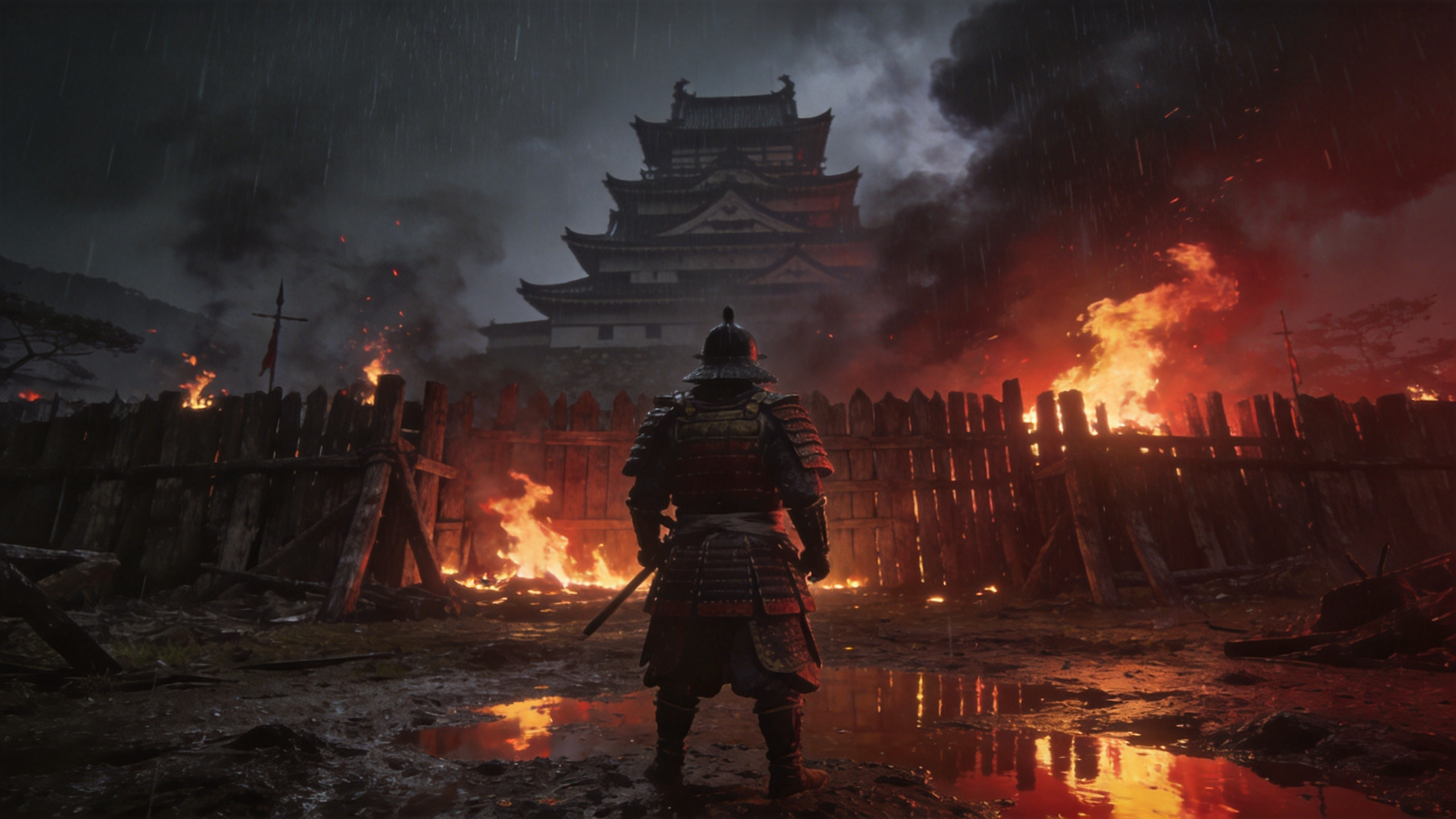
Total War: Shogun 2 Complete Edition went on sale on October 13. On October 16, Sega and Creative Assembly removed it from storefronts . Three days, one Steam review page, and a remaster of a sixteen-year-old classic was gone. The joint statement contains the sharpest line of the week: the game "has fallen short of both your expectations and our own standards." Players were not angry about the price. They were angry that work which should never have been handed to a model had been handed to one.
What happened: live on October 13, delisted on October 16
According to GamesIndustry.biz, the remaster's Steam reviews turned "overwhelmingly negative" within days of launch. The complaints were unusually specific: unit cards showed classic generative AI artefacts, and in the new cutscenes armour merged into characters' bodies (October 16, 2026).
Extra fingers gave it away
The original wording was restrained: extra fingers. A unit card is something a player looks at dozens of times in a session, so a single miscounted hand gets screenshotted and magnified a hundred times. The remaster failed precisely where it was most visible and least forgivable.
In their own words: below your standards and ours
Sega and Creative Assembly did not blame an outsourcing partner. "We've seen your feedback, comments, and reviews. We agree that the current experience is not where it needs to be," the statement read. The remedy: work with platform holders to temporarily remove the game from sale and reinstate the original, keep existing owners able to play, and investigate the causes with the development partner.
Note the sequence. Delist first, restore the original second, talk about fixes last. This was not a bug that a patch could close. It was the product itself being judged unfit.
The fallout: reviews, delisting, and the original back on sale
Shogun 2 dates from 2011, and a remaster sells nostalgia to veterans and a doorway to newcomers. That audience mix makes reputation fragile: veterans spot ruined art instantly, while newcomers only see a game that looks cheap.
The second time this year
The collateral damage is worse than one title. Sega already took criticism this year over generative AI in Crazy Taxi: World Tour, whose Steam page carried an AI disclosure and which the company described as a support tool for developers, with generated assets still reviewed by the team . Two incidents in one year suggests the missing piece is not disclosure. It is a review gate.
Why remasters fail here: cards are identity assets
The standard remaster pipeline is upscale and repaint — run the old textures through a model, add detail, then have artists clean up. For terrain, lighting and materials that works, because nobody stares at one rock.
Unit cards, faces and cutscenes are different. They are identity assets. Players recognise that face, that armour, that hand. Every detail a model invents here is an art decision made on the original artist's behalf, and the model has no standing to make it. An extra finger is not a resolution problem. It is a stranger wearing a familiar uniform.
The other side: AI is not the crime, the pretence is
Generative AI in background assets, texture fill and QA support is already normal and not worth outrage. Sega said on October 6 that it would not entrust the creative aspect of games to AI and was using the technology for efficiency elsewhere — a defensible position.
The failure is using it without a real check and without clarity about where. Players were not objecting to a tool. They were objecting to paying full price for what turned out to be an intermediate output of a model experiment.
My take: they saved art hours and spent reputation
The maths never worked
Filling unit cards and cutscenes with generated assets saves, at most, a few hundred artist hours. It cost a delisting, refunds and years of extra scepticism attached to the words "Sega remaster". No spreadsheet makes that trade look good.
What deserves credit is the speed of the retreat: three days to delist and restore the original suggests Sega knows exactly where the quality bar sits. The bar simply was not enforced before release. A remaster is not a resolution bump; it is a memory being delivered a second time. Somebody should read that sentence aloud at the next greenlight meeting.
While compiling GameHub coverage of remaster launches, one pattern keeps repeating: the verdict is decided in the first thirty seconds a player sees. This time those thirty seconds were a unit card with too many fingers. We will track the fix and any re-listing at gghubs.com.
Three questions players keep asking
Will the remaster come back?
A: After delisting the game on October 16, Sega calls the removal temporary and says it is investigating with platform holders and its development partner, but it has given no re-listing date.
What happens to people who already bought it?
A: Existing owners can still access and play the game, and it will not vanish from libraries. The original is being reinstated, so anyone uneasy about AI assets can play that version instead.
Can generative AI be used in games at all?
A: For background assets, texture fill and QA support it is already widespread. The argument is about identity assets — faces, unit cards, cutscenes — and about whether storefronts disclose their use.