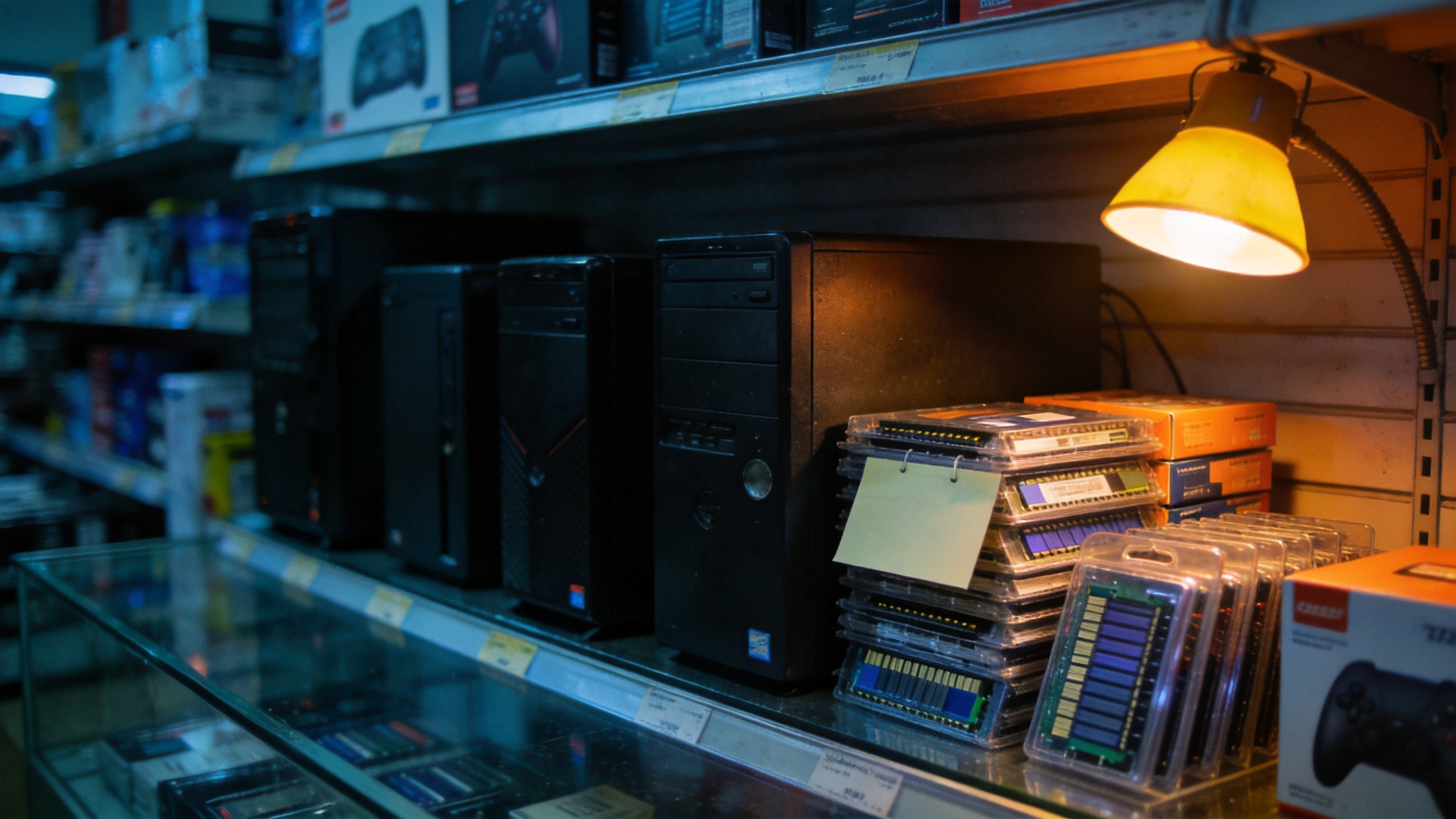
Circana data shows US gaming hardware unit sales fell 15% year over year in August 2026 to 559,000 units, with hardware spending down 3% to $302 million and year-to-date spending down 11% to $2.5 billion. Sony, Microsoft and Nintendo have all raised console prices this year, pushing the average selling price of a new console to a record $541. The cause is not greed: AI data centers are absorbing the memory and flash supply consoles depend on.
一、559,000 Units in August: Price Hikes Scared Buyers Away First
Consoles used to get cheaper over time. That rule is dead. Circana's numbers split the three platform holders cleanly: Sony's PlayStation 5 hardware revenue actually rose 17% year over year in August while unit shipments fell 11%; Microsoft's Xbox Series hardware spending dropped 13% and unit sales collapsed 31%; Nintendo's hardware spending fell 13% and unit sales 15%. The Switch 2 still holds the top spot for both units and revenue, in August and year to date, and it still could not hold the market up.
Xbox Is at an All-Time Low Year to Date
Zoom out to the year to date through August: Xbox hardware units are down 33%, an all-time low, and PlayStation units are down 25%, the lowest since 2013 (Source: Circana via Polygon, 2026-10-09).
Average Selling Price: $541 — Used PS5 Pros Go for Over $1,000
Circana senior director Mat Piscatella put the number plainly: the average selling price of new gaming hardware in the US reached $541 in August, against a previous August record of $476.
He added a detail worth sitting with: "We are also starting to see, spotty right now, but we are starting to see some products becoming unavailable, likely because of the RAM and component crisis." He specifically flagged the PS5 Pro as hard to find, with some retailers selling used units for more than $1,000.
There is an underrated point here. Console price cuts historically came from process-node maturity driving component costs down. When the components themselves are inflating, that road is closed.
二、The Blame Is Not on the Console Makers — AI Took the Memory
Sony raised the US PS5 from $549.99 to $649.99 effective April 2, moved the PS5 Pro up $150 to $899.99, and lifted the China-market PS5 Pro from 5,599 yuan to 6,299 yuan. Nintendo moved the Switch 2 from $449.99 to $499.99 on September 1. Microsoft started earlier, and the Xbox Series X has now climbed $300 from launch.
All three give the same reason: memory and storage component costs. The AI data center buildout has pulled advanced capacity at Samsung, SK Hynix and Micron into high-bandwidth memory, squeezing consumer DRAM and NAND supply. Per CFM China Flash Market, DRAM and NAND contract prices rose 340% and 320% respectively in the first half of 2026 (Source: CCTV citing Economic Daily, 2026-07-07).
Nintendo Will Absorb Roughly 100 Billion Yen This Fiscal Year
The pressure is already showing up in earnings. Nintendo told investors that memory component increases plus tariff effects will cost it roughly 100 billion yen this fiscal year, and cut its fiscal 2026 Switch 2 forecast to 16.5 million units, down 16.9% (Source: Jiemian News, 2026-10-10).
Sony's numbers are blunter. PS5 shipments came in at 8 million units in a single quarter, down 16% year over year, dragging its Game & Network Services segment revenue down 4%. Sony's own line on fiscal 2026 console sales is refreshingly plain: consoles are not selling this year.
三、 How Much Does This Look Like the 1983 Crash?
Some analysts have compared this to the early-1980s North American video game crash (Source: GCORES, 2026-10-11).
I don't buy it, at least not fully. 1983 was a supply-side collapse: bad games destroyed retailer and player confidence, while the hardware itself stayed cheap. This is a demand-side squeeze — the hardware did not get worse, it got expensive. The only real overlap is the reflex that follows: once players decide the money isn't worth it, the whole chain cools within months.
四、Can GTA6 Save Consoles? Half of Them
Everyone is watching Grand Theft Auto VI on November 19. The logic is simple: people who held off will finally buy a machine for it, whatever it costs.
There is a wrinkle. Take-Two's pricing philosophy ties price to content volume, and the standard edition lands in the $70 to $80 range. With a $649 console and an $80 game, "buy a console for one game" now clears $700.
So GTA6 probably rescues software revenue, not hardware units. The real escape route for platform holders is treating hardware as a storefront and subscriptions plus online services as the business, which explains why all three pushed memberships and cloud streaming at the same time they raised prices. For ongoing coverage of hardware and distribution shifts, GameHub's gaming news desk tracks this beat.
五、FAQ
Is buying a console right now a waste of money?
It depends on what you play. If you only want single-player blockbusters like GTA6, November is a reasonable moment: $649 for the disc PS5 and $799.99 for the Xbox Series X are the current floors, with little room for a cut while upstream memory pricing keeps rising.
Will console prices come back down?
Not soon. The memory pricing cycle is now driven by AI data center demand, Samsung expects shortages into 2027 and 2028, and TrendForce forecasts a 4.4% decline in global console shipments for 2026. Price cuts normally require a process-node generation change.
Is the tariff situation the reason prices went up?
It is a contributing factor, not the main driver. Nintendo attributed its US Switch 2 increase to changes in market conditions, including last year's tariffs, but the dominant cost is memory and flash pricing. Tariffs are one-off; component inflation compounds. Longer-horizon data on this is tracked at gghubs.com.