Sony Brings AI Upscaling to the Base PS5: No New Console Required, But the PS5 Pro Just Lost a Selling Point
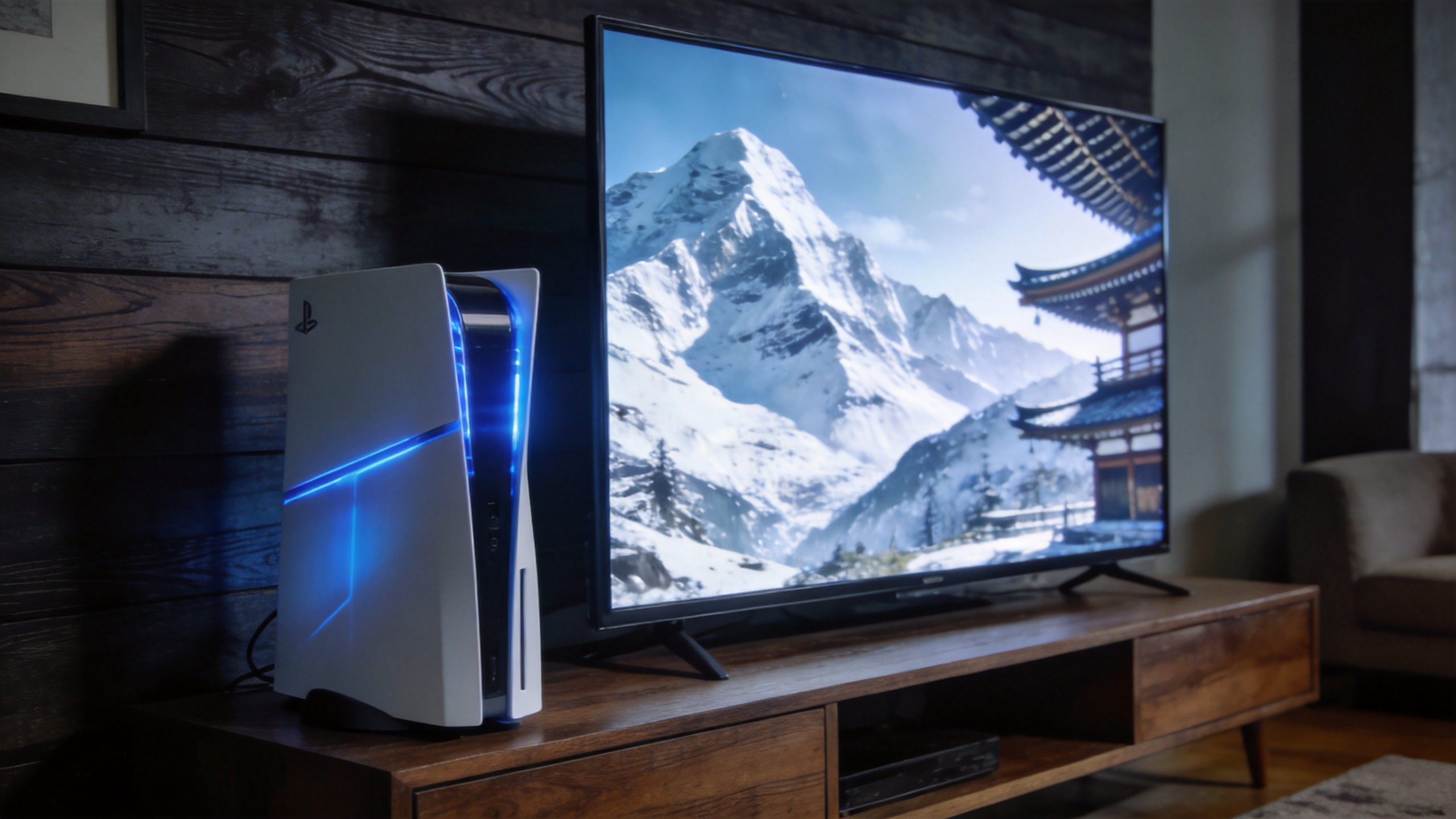
Sony has pushed its AI upscaling down to the base PlayStation 5. The new library is called QSSR, it shipped on October 1 as an optional graphics toggle inside Marvel's Wolverine and Ghost of Yōtei, and it costs players nothing . This is not a cosmetic patch. PSSR has been the PS5 Pro's headline feature since launch, and Sony had said the base console lacked the compute to run it. Working with AMD, Sony slimmed the neural network down and hand-tuned it to the PS5's limits to build a "performance tier" called QSSR . For anyone holding a launch-era PS5, that means sharper images without buying new hardware. For Sony, it means the PS5 Pro has one less reason to exist.
一、What QSSR Actually Is: Shrinking a Pro Feature Onto an Older Console
How QSSR Differs From PSSR
PSSR stands for PlayStation Spectral Super Resolution. It analyses a frame pixel by pixel, then reconstructs detail with a neural network, producing a far more temporally stable image than traditional temporal anti-aliasing. The catch is cost: the PS5 Pro carries roughly 300 TOPS of dedicated acceleration hardware for it, and the base PS5 does not .
QSSR takes a different route. Sony compressed the network architecture and hand-tuned the implementation for the PS5, trading some accuracy for performance. Digital Foundry's read is blunt: PSSR still looks better, but QSSR should beat the base PS5's existing options — TAA, Unreal Engine's TSR, and AMD's FSR 3.
The First Two Games Are Both First-Party
The October 1 patches went to Insomniac Games' Marvel's Wolverine and Sucker Punch Productions' Ghost of Yōtei. Both studios published quotes. Insomniac's technology director Mike Fitzgerald said QSSR adds "pixel-level" clarity to Wolverine's crowded Madripoor streets and dense Shinjuku alleys. Sucker Punch lead rendering engineer Jasmin Patry said QSSR delivers "a level of temporal stability that hasn't been possible on the PS5 console until now" .
Media impressions were less uniform than the marketing. Most hands-on notes said Wolverine gains more than Ghost of Yōtei, largely because Yōtei already looked clean on the base machine.
二、After the Patch: The Base PS5's Image Baseline Gets Redrawn
The Base PS5's "Aging Hardware" Reputation Takes a Hit
The base PS5 launched in 2020. By 2026 it is in its sixth year, and its installed base dwarfs the Pro. The single loudest complaint about it has been soft, shimmery image quality under heavy load. QSSR doesn't touch the silicon — it swaps a software library — and closes part of that gap. For owners of launch units, that is real life extension.
The PS5 Pro's Differentiation Gets Thinner
AI upscaling was a core part of the Pro's pitch, and its price reflected that. Now the base machine has "AI-guided upscaling" too, and the Pro's remaining edge is simply "a better tier of it." Sony left itself an exit line in the blog post: PSSR remains the gold standard on PS5 Pro, QSSR is the performance tier. Politely worded, but the argument for upgrading got weaker.
Developers Have to Opt In
QSSR is not a system-level post-process. A game has to be patched to expose it, which means how far the tech spreads depends on whether publishers will fund more work on titles that already shipped. Sony says QSSR will open up to more PlayStation developers, but has not given a timeline.
三、The 300 TOPS Arithmetic: Why Sony Moved in Year Six
The 300 TOPS Arithmetic
Fitting AI upscaling onto older hardware is a cost problem. The same network that runs comfortably on 300 TOPS of dedicated silicon has to be compressed and compromised to run on a base PS5. Sony's answer — "streamlined neural network architecture" plus hand-tuned implementation — translates to a simple player-facing trade: a little image accuracy in exchange for an upscaler that actually runs .
A Standard Mid-Generation Move
The second half of 2026 sits in the quiet stretch before the next console cycle. Rather than pushing players to buy new boxes, squeezing more out of the ones already in living rooms is cheap, popular, and buys time for the next generation's tech stack.
四、Not All Good News: Three Costs of a Performance Tier
QSSR is a performance tier, not a quality tier. Every upscaler involves trade-offs, and in extreme scenes you may see slight detail drift or shimmer in highlights. The more concrete cost is developer time: a game that shipped two years ago now needs a fresh integration pass to expose a QSSR toggle, and that is a publisher's accounting decision, not a player's.More console and industry coverage at GameHub.
五、Three Questions About QSSR
How do I turn QSSR on for my base PS5?
You don't need to do anything special. Update Marvel's Wolverine or Ghost of Yōtei to a build from October 1 or later, then look for the QSSR graphics option in the settings menu .
Will QSSR cost me frames?
Sony's line is that it improves both detail and frame rate, because AI upscaling lets a game render at a lower internal resolution. That is the official position; for measured frame-time data you should wait for third-party analysis from outlets like Digital Foundry.
Is the PS5 Pro still worth buying?
If AI upscaling was your only reason, the case is weaker. But PSSR still produces a better image than QSSR, and the Pro's roughly 300 TOPS of headroom matters more as future titles get heavier. Short version: buy the Pro for the ceiling, skip the upgrade if you just want a cheaper image-quality win.