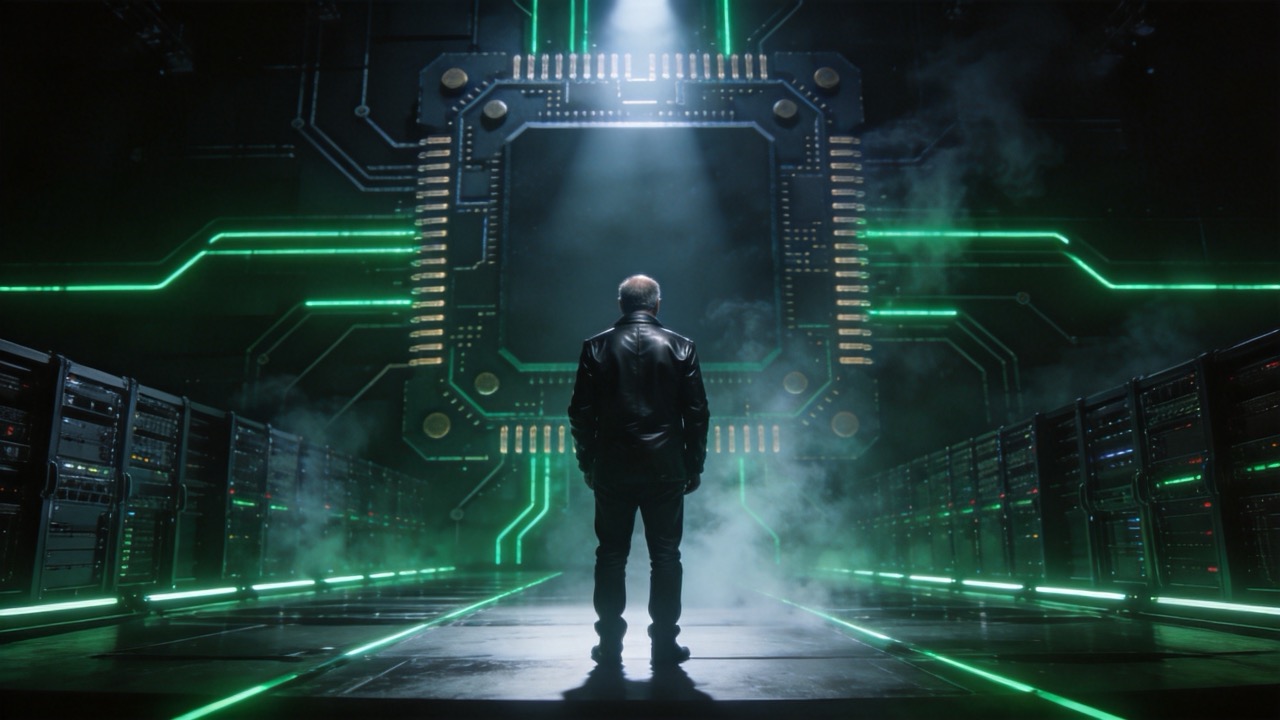
The official headline is three words of corporate calm: Board Reinstates Jensen Huang. The timeline underneath it is not calm at all. Huang resigned on November 12. On November 17 the board told Reuters it did not intend to reinstate him. On November 23 it voted unanimously to do exactly that.
Eleven Days, Three Dates
November 12: resignation, and a succession search begins
Huang stepped down as CEO. AUTOMATON's account says the board immediately opened a process to pick a successor and installed CFO Colette Kress as interim CEO, a role she held alongside her finance duties. For the first time in three decades, the company's operating structure did not have its founder at the top.
November 17: the board says it is not happening
Five days later, the board said publicly that it had no intention of reinstating Huang, as reported by Reuters. That single sentence is what turns the November 23 decision from a formality into a reversal. Without it, this is a comeback. With it, it is a U-turn.
November 23: unanimous, and the CFO hands back the keys
The press release quotes board chair Harvey C. Jones saying the board believes "Jensen is the right person to lead NVIDIA," and that his reinstatement is in the best interests of stockholders, employees, partners and customers. In the same paragraph he thanks Kress for "outstanding service as interim CEO."
Why the Board Changed Its Mind
The official explanation is one sentence: after hearing from US government officials, the board was confident that Huang's return would not create a national security risk.
Read that again. A trillion-dollar semiconductor company needed a government read before it could re-hire its own founder. The board's authority over its CEO is not absolute when export controls and national security are in the room.
Three new guardrails went in with him
The same announcement describes a governance package, not just a personnel decision. A committee of independent directors continues its investigation, supported by independent counsel. The board created a National Security and Export Control Committee, also all independent directors. Nvidia is recruiting a new Chief Compliance Officer reporting to the nominating and governance committee. The release states the investigation "will proceed to conclusion" and that the company will keep cooperating with ongoing government investigations.
The resignation was never fully explained in public
Nvidia's reinstatement release does not state why Huang stepped down. Earlier reporting, referenced in the company's own filing language, described him as the target of a foreign intelligence effort. That is a security matter, not a personality clash, and it explains why the board could not simply wave him back in on day two.
What This Means for Gamers
Nvidia's public face in gaming is GeForce. Two decades of product cadence — unified shaders, ray tracing, then repurposing GPUs for AI — came from one person's architectural bets.
Graphics cards are not decided in press releases
What players actually feel is drivers, supply and price. Those are set by product cycles and manufacturing allocation, not by a CEO's personal style. In the short term, this changes nothing about what you can buy. In the medium term, it changes whether the company keeps making large, expensive bets on the next architecture.
The Risk: This Is Not Over
The line most people will skip is the one saying the investigation continues, alongside ongoing government inquiries. Huang returned to his office the same week a probe into his situation remained open.
A compliance officer seat is still empty
A company that needs a new national security committee and an external chief compliance officer is admitting its previous structure had a gap. Until that gap is filled, every export decision and every leadership decision carries an asterisk.
My Read: The Perks and the Weakness of a One-Man Company
Nvidia proved two things in eleven days. It cannot operate without Huang, and its governance can reverse itself in under a week. Both statements are true, and the second is the one that should worry people.
For investors this is a textbook key-person risk case. For gamers it is a finance story with no gameplay consequences — until the GPU you are waiting for slips because a boardroom crisis ate a quarter. More hardware coverage lives in GameHub's news section.
Would you call this governance correcting itself, or a board folding under pressure? Pick a side in the comments.
FAQ
When was Jensen Huang reinstated?
A: November 23, 2026. Nvidia's press release confirms a unanimous board vote reinstating him as president, CEO and board director, eleven days after his November 12 resignation.
Why did he resign?
A: The reinstatement release does not give a reason. Earlier reporting described him as the target of a foreign intelligence effort; the board formed an independent-director committee and retained independent counsel.
What changed in Nvidia's governance?
A: A new National Security and Export Control Committee, a publicly recruited Chief Compliance Officer, and an independent-director investigation that the company says will run to conclusion.
Will this affect GPU prices?
A: Not directly. Prices track supply and product cycles rather than CEO changes; the medium-term question is how aggressively Nvidia funds its next architecture.
Who chairs the board now?
A: Harvey C. Jones remains board chair, as stated in the November 23 announcement.