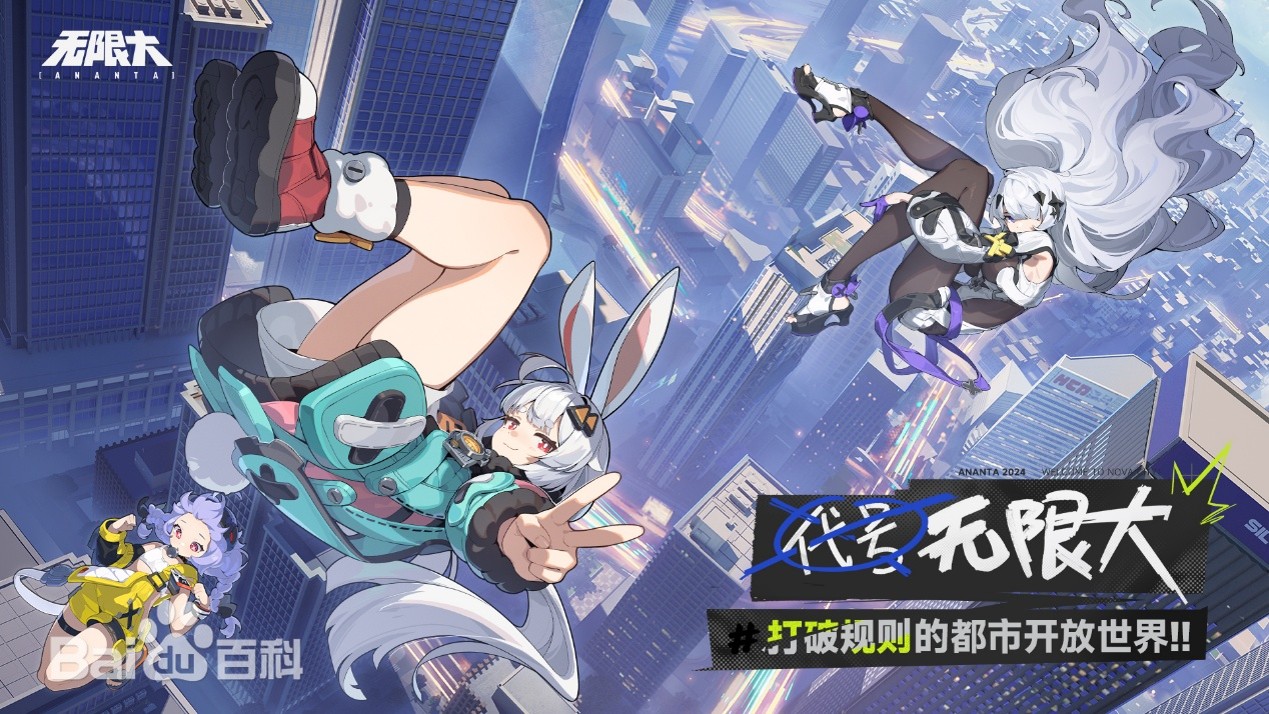
Ananta announces no character banners — all characters join free through the main story
This morning, the most eye-catching piece of gaming news wasn't some blockbuster launch, but a blunt statement: “We're not doing character banners.” NetEase's urban open-world title Ananta has officially confirmed that every playable character is obtained without gacha and without spending — they simply join your party as you progress through the main story. The news was quickly picked up by NetEase News, 3DM, and other gaming media outlets today.
What does this game actually look like? According to the developers, players take on characters with distinct identities across different cities, meet companions, and build their own team — an urban setting with a multi-protagonist ensemble, which is exactly why players jokingly call it an “anime GTA.” The developers' reason for going gacha-free is just as bold: the gacha model doesn't allow for long-term character development, and removing loot boxes gives the team a longer runway to polish characters and story. The game is developed by Naked Rain studio and published by NetEase, is free-to-play, and earns money through cosmetic purchases like outfits and vehicles, with global launch set for January 15, 2027. Actually, the “no banners” approach was first mentioned back in September last year, but it didn't make waves then; announcing it again now, during the official marketing window, is like welding those words onto the game's banner.
Player reactions are sharply polarized. One side cheers: “An anime GTA with no banners? My youth is complete,” joking that it stitches together multiple hit games yet still wants to play the virtuous outlier. The other side immediately pours cold water: without banners, can selling skins alone support R&D costs that run into the hundreds of millions for an open-world game? Bear in mind, a AAA-tier anime game burns money just as fast as a console blockbuster. Content creators in the anime-game space on Bilibili and YouTube also jumped in overnight: “Ananta has no banners? No artifacts, no three-piece sets, all characters free — can that really work?” Whatever the conclusion, the phrase “anti-gacha” has already become the new traffic magnet.
On the same track, the other side paints a very different picture. The collaboration between Tencent's Call of Duty: Mobile and miHoYo's Honkai Impact 3rd was announced on August 7 and scheduled for September; on August 31 the studios dropped another teaser image for a “collaboration event” to keep the hype going: Raiden Mei, Kiana, and Bronya — three Herrschers — are about to take up guns and head to the battlefield. In Honkai Impact 3rd lore, all three are powerful enough to take on an entire legion alone, so putting them in a shooter against real players — Herrschers firing guns — that mismatch is itself ready-made meme material. What's more, this is the first game-level collaboration between Tencent and miHoYo in history; the two had only ever crossed paths at the community level before. miHoYo's willingness to lend Tencent its poster girls comes down to growth anxiety: the top anime titles are all hitting their ceiling, so rather than competing internally, it's better to tap Call of Duty: Mobile's global player pool for another haul.
Look deeper, and this is a crossroads for the entire anime-game track. Looking back, miHoYo proved in 2020 with Genshin Impact that “open world + gacha” could rake in money, turning gacha into the industry standard. Now NetEase is betting on “open world minus gacha,” wagering that the new generation of players is more disgusted by words like pity, off-banner pulls, and probability disclosure than they are dependent on “free-to-start.” In truth, the anti-gacha undercurrent has been building for the past two years: probability disclosure rules, spending restrictions on minors, wave after wave of “boycott spending” sentiment — developers know better than anyone that their reputation is depreciating. It's just that gacha is too profitable for anyone to be the first to let go. If Ananta actually makes this work, it hands the whole industry a stepping stone, and NetEase won't be the only one to follow. Whoever corners this crowd of players tired of gambling on draws could rewrite the anime-game business model. January 2027 — we'll see.
Some cold water is still warranted: no banners doesn't mean no spending. Cosmetic monetization taken to the extreme can still empty your wallet. Besides, Ananta is still far from launch, and this industry has no shortage of precedents of games that promised “no pay-to-win” before launch and then rolled out bundle after bundle afterward — changing course midway is nothing new. The same goes for the CODM side: if the collab skins get stuffed into gacha boxes as usual, “double-fan delight” could instantly turn into “double-fan rage.” Remember this: the people praising the “table flip” today have long memories — the moment Ananta sneaks in a banner, they'll be the first to come back and curse.
My take: gacha isn't the original sin of anime games, but pricing character affection and forcing players to gamble is definitely one of the most loathed mechanics in this business. Someone willing to flip the table first — I respect them for it. Whether they survive is another matter. Let me ask you: if Ananta really delivers all characters free with only cosmetics sold, would you drop your current gacha game for it? Come share your thoughts in the Gghubs comments.