
this Palworld work suitability guide is about layout logic, not tier lists. Below: how suitability levels should be read, why one specialist per station beats three generalists, why Ancient Bark deserves its own dedicated chain, and how the per-player building cap changes base design on shared servers.
 Applicable version: v1.0.5 (updated 2026-09-15; source: Palworld official announcement, 2026-09-15)
Palworld 1.0.5 official changes: the two that matter
v1.0.5 is a fix patch titled "v1.0.5: Bug fixes", addressing terrain and building textures loading at visibly reduced resolution for some players . The layout-relevant changes came one patch earlier.
What v1.0.4 changed
v1.0.4 (2026-09-07) lowered the Work Suitability required for Ancient Bark gathering to Lv. 1, added a server setting letting admins cap buildings per player, and raised the PC default frame cap to 120 . The first two reshape base planning directly.
Why those two matter
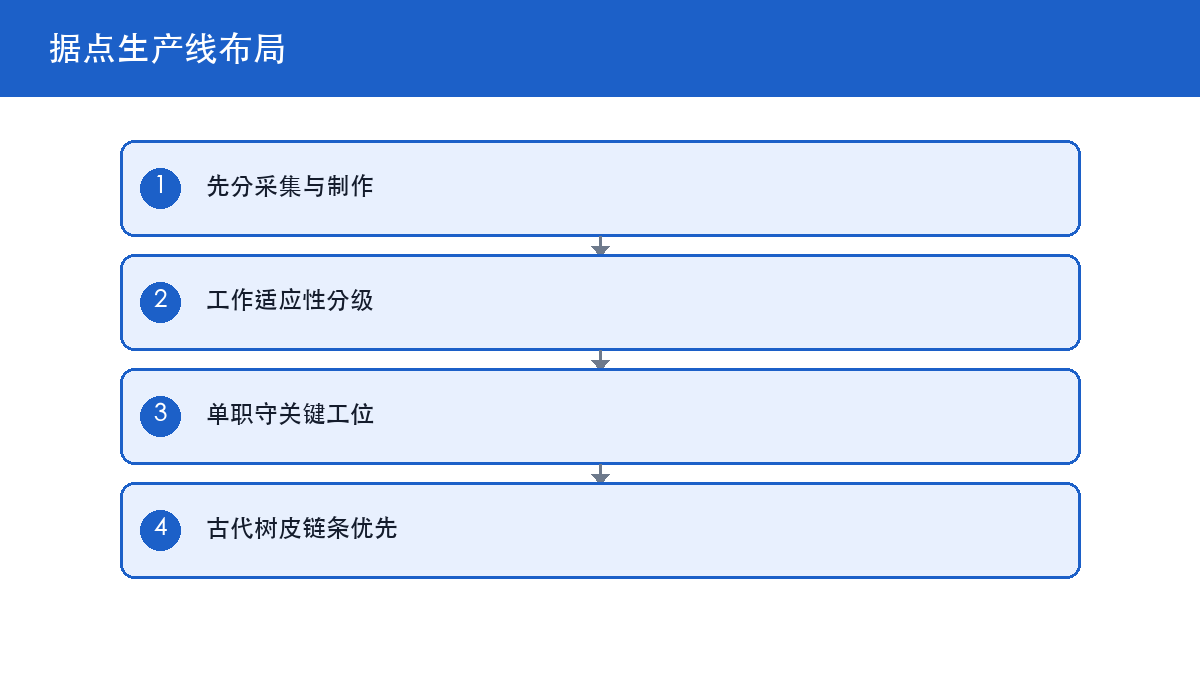
Ancient Bark dropping to Lv. 1 means an early-game Pal can already harvest it, so the wood chain starts in the first hours instead of the mid game. A building cap means carpeting a hillside is no longer viable, so layouts have to go compact and vertical .

Palworld work suitability: how to read the levels
Work suitability is a set of per-job levels — gathering, logging, mining, transporting, crafting, planting, watering and so on — and higher levels mean faster work. Whether a Pal deserves a base slot depends on its level in the job you need, not on its combat stats.
One specialist per station
One high-level Pal on a station is steadier than three low-level ones. Pals path between stations constantly, and crowding a single point makes them block each other .
Where generalists go
Pals that can both gather and haul belong at the end of a line, where they can carry output during downtime. Put them at the start of a line and hauling interrupts gathering.
Note: more Pals is not better. Overcrowding drags down SAN and overall throughput; check the in-game base screen for the practical ceiling .

Palworld base layout: the three-zone line
The three zones are gathering, crafting, and storage or hauling. Connect them along the shortest path, because Pal travel time converts directly into lost throughput .
Gathering: build against the resource
The gathering zone has to sit on top of the node, since gatherer Pals work in a limited radius. Building at the edge of a resource cluster removes most of the walking.
Crafting: cluster the benches
Cluster workbenches in one place so a single crafting Pal can work continuously. Scattering benches makes Pals run between them and roughly halves output .
| Zone | Key structures | Pal setup | Rule |
|---|---|---|---|
| Gathering | Logging site, mine, bark nodes | Single-job high-level gatherers | Build on the node |
| Crafting | Workbench, furnace, production line | Single-job crafters | Cluster together |
| Storage | Chests, feed box | Multi-job haulers | At the line's end |

Palworld Ancient Bark chain: running it after v1.0.4
Ancient Bark is a core building and crafting material, and since v1.0.4 it needs only Work Suitability Lv. 1 to gather. That change makes a stable bark line available in the early game rather than the late game.
Three steps, three jobs
Gather the bark, feed it into the crafting bench, store the output. Each step needs a different job, and mixing them makes Pals switch tasks constantly and lose efficiency .
Keep bark and wood separate
Bark and wood come from different nodes, so do not expect one Pal to service both. Split them and both chains run at full load .

Palworld base upkeep: SAN and feed
The floor on base throughput is SAN. Low SAN means Pals slack off, wander, or fall ill . Food, beds and hot springs are production infrastructure, not decoration.
Feed has to scale with headcount
Food consumption rises with Pal count. Expand planting and cooking before adding Pals; doing it in the other order produces a base-wide hunger spiral .
Beds and springs per Pal
Too few beds means Pals sleep on the floor and recover slowly, and hot springs are the fastest SAN recovery structure . Match both to headcount rather than saving on them.

Palworld late game: level cap and tech order
The 1.0 release raised the player level cap from 65 to 80 and brought the Pal total to 287 ; v1.0.3 lowered the Jetragon tech unlock from 79 to 70 .
Spend tech points on throughput
Put tech points into production first: higher-tier benches, furnaces and gathering structures. Combat tech waits until the lines are stable .
Planning around the building cap
Since v1.0.4 admins can cap buildings per player , so on shared servers plan density up front: build the production core first and add decoration last, rather than spending the quota on perimeter walls.Breeding and material routes for this patch are collected on GameHub.
Palworld FAQ
What Work Suitability does Ancient Bark need?
A: Lv. 1 since v1.0.4 , so it is available early.
Are more base Pals always better?
A: No. Overcrowding lowers SAN and throughput; one specialist per station works better.
How many Pals are there in total?
A: 287 in the 1.0 release, including 72 new ones .
What is the player level cap?
A: 80, raised from 65 in the 1.0 release .
Is there a building limit?
A: Since v1.0.4 admins can set a per-player building cap .
Action checklist
- Start an Ancient Bark chain early, since Lv. 1 is enough.
- Keep one specialist per station.
- Build gathering on the nodes, cluster crafting, put storage at the line's end.
- Expand food and beds before adding Pals.
- On shared servers, plan the building quota before decorating.