
A quick word on versions: Palworld is currently on v1.0.5 (September 15, 2026). The 1.0 release landed on July 10, 2026, and the next major update, “Side by Side,” is officially slated for winter 2026, so there is still plenty of time. This article covers the breeding side only — how passives are inherited, how to push talents, and where mutation and awakening fit in. Base operations and material production lines get their own piece in the Palworld section of GameHub.

Start with How Breeding Actually Works
Mutation eggs are a probabilistic outcome of breeding, and the developers have never published the actual rates. Every “such-and-such percent” figure floating around online is a community estimate, so treat it as a rough guide rather than gospel. The one thing that clearly raises your odds is the Luxurious Vegetable Cake. Regular Cake will technically do, but the chance is pitifully low.
Before you start, sort out how the three systems divide the work. Talents are each Pal's innate stats, built up generation after generation through breeding. Condensation consumes same-species Pals to raise the level cap and passive quality. Awakening is new in 1.0 and costs Radiant Gems produced by the World Tree. Mix up the order of these three and your materials go straight down the drain.
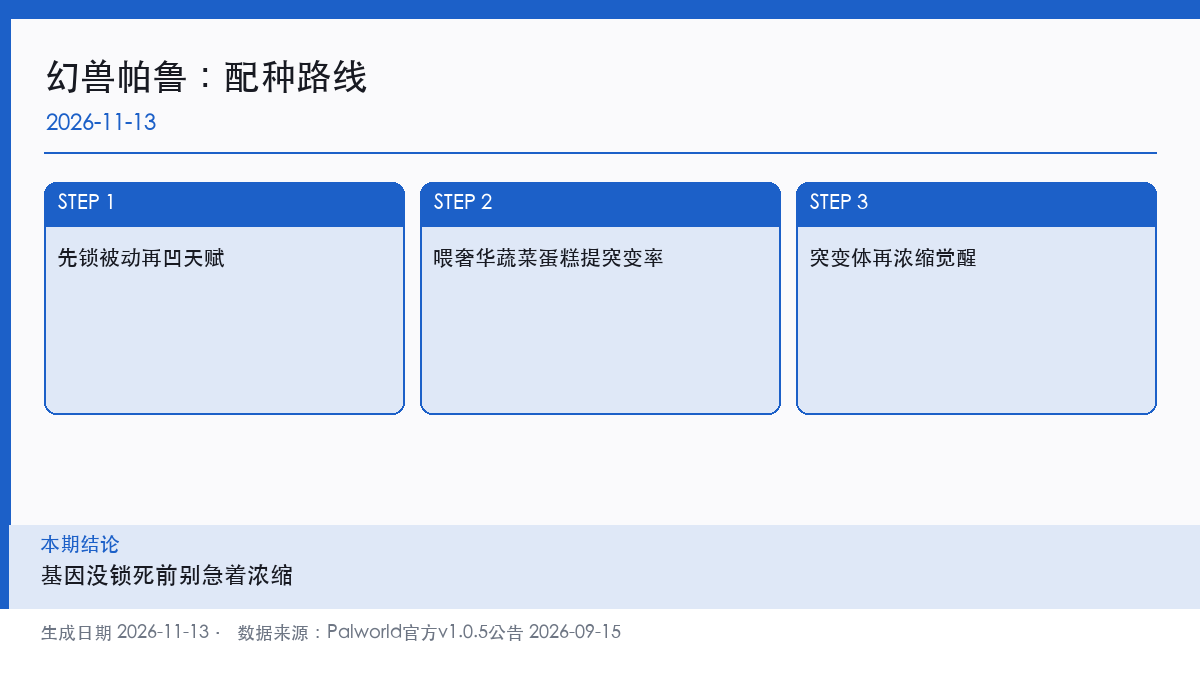
The classic beginner trap is hatching a Pal with passable passives and rushing to condense it, then stumbling onto a better base later and watching all that investment evaporate. Recommended breeding lists always put the passive combination first, not rarity. Mutation only amplifies the base you already have — a weak base, amplified, is still weak. So lock the passive combination first, stack numbers with condensation second, and leave mutation and awakening for last.
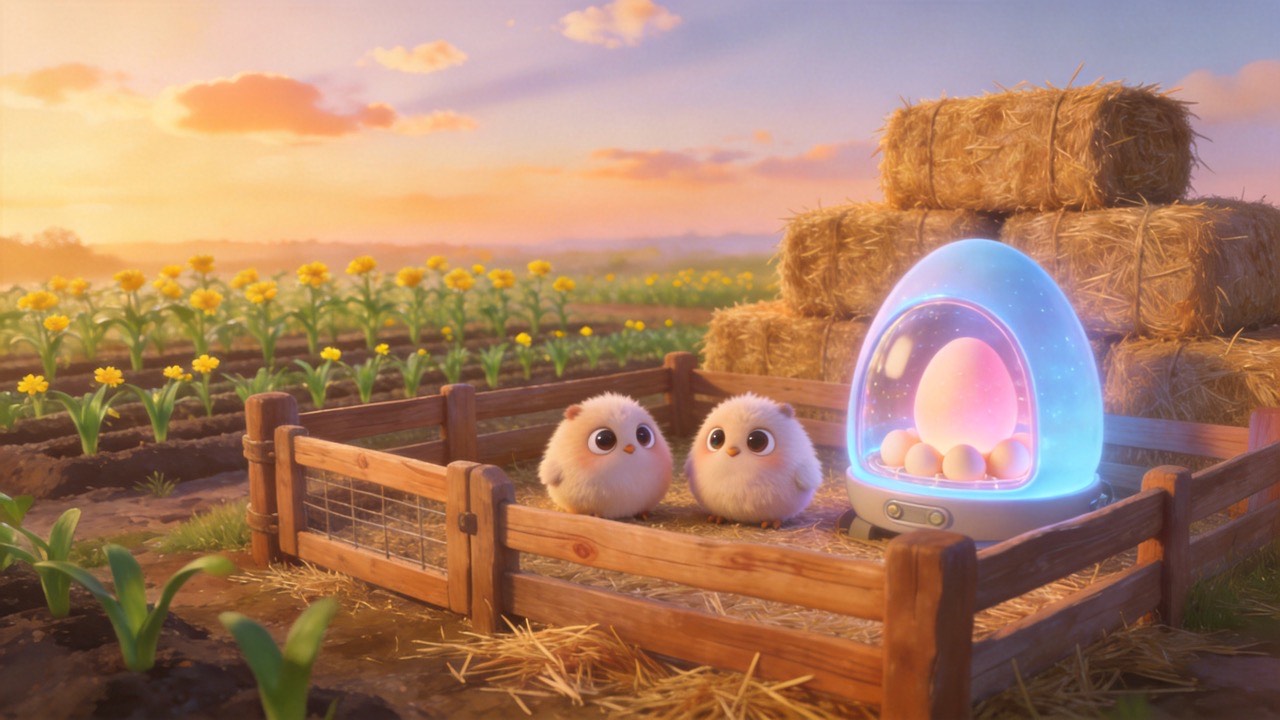
Luxurious Vegetable Cake: The Recipe and Where the Materials Come From
The recipe is simple: 12 Flour plus 10 Onions. Flour is milled from Wheat, while Onions come from farming or foraging. The real bottleneck is not cooking — it is how fast your farm produces. Growing Onions at your base is the most reliable route, and Wheat works the same way, but both lines need Pals assigned to watering and planting, or you will end up in the awkward position of having the materials and nobody to grow them.
This is really base operations work, running in parallel with breeding. My advice comes down to one line: get the farm running smoothly before you open the breeding farm. Otherwise the cake supply cannot keep up, and a breeding farm that is open is just spinning its wheels.

Three Steps to Lock the Genes: Fix the Passives, Push the Talents, Then Mutation and Awakening
When you actually start, work in three steps. Step one is deciding the role: is this Pal going into combat, onto base work, or under a saddle as a mount? Settle that first, because the passives each role wants have almost nothing in common. Only then go looking for parents with the matching passives — do not do it backwards and breed whatever parents happen to be on hand.
Step two is pushing talents. Talents climb generation after generation, so favor high-talent parents whenever you can. Do not chase mutations at this stage — reliably producing high-talent offspring is already a win.
Step three is mutation and awakening. A mutation egg gives you “the stronger generation,” but that value rests on a stable base. Raise the odds with Luxurious Vegetable Cakes first, then condense the mutant once it appears, then awaken it — that way every mutation lands on an individual you can actually use.

Base Workers: Which Passives Are Worth Passing Down
One change deserves a note of its own: v1.0.4 dropped the Work Suitability required to gather Ancient Bark to Lv. 1. Work that used to demand a high-suitability Pal can now be handled by a low-tier worker, and breeding no longer needs a dedicated generation of “Ancient Bark specialists.”
For combat Pals, prioritize damage-boosting and survivability passives; for mounts, movement speed and stamina. Discussions of breeding traits often bring up “three-passive stacking” builds, but whether you can actually fill all three depends on your parent pool, so do not copy someone else's combination wholesale. The passive pools for the three roles barely overlap, which makes a Pal that serves one role only the least hassle — do not expect a single Pal to fight and work the base at the same time.
How Many Materials to Stock for a Breeding Run
Breeding is ultimately time traded for probability: the number of cakes caps how many rounds you can hatch, and the number of incubators caps how many you can hatch at once. At 12 Flour and 10 Onions per cake, ten breeding rounds costs 120 Flour and 100 Onions — no small outlay for an early base. Same as before: expand the farm first, then the breeding farm.
The Ancient Incubator added in 1.0 is tied to World Tree progress and counts as a late-game facility. Before you unlock it, standard incubators can still carry the whole route — you just run less in parallel.
For breeding farm scale, start with “4–6 eggs at once.” Go higher and cake production cannot keep up, so eggs queue; go lower and you lose the parallel advantage. These are rules of thumb rather than official numbers, so fine-tune them to your own farm's throughput.

A Few Things That Are Easy to Overlook in Practice
Lowering the Ancient Bark requirement to Lv. 1 affects more than gathering itself: early construction chains finish one or two stages sooner, base upgrades speed up visibly, and your breeding plan can shift accordingly — no need to keep a high-suitability Pal around just for bark.
Also worth noting, v1.0.4 raised the default PC frame rate cap to 120. Breeding farms and bases both mean long idle sessions, where a stable frame rate matters more than peak numbers. Stutter directly skews your read on hatching progress, so do not chase the ceiling — stability is what counts.
Palworld 1.0.5 Practical Tips
Knock-On Effects of Ancient Bark at Lv. 1
With the Work Suitability threshold down to Lv. 1, early construction chains can finish one or two stages sooner and base upgrades speed up noticeably. Your breeding plan should adjust as well: no need to keep a high-suitability Pal dedicated to gathering bark.
Frame Rate and Feel
v1.0.4 set the default PC frame rate cap to 120. Breeding farms and bases are both long idle sessions, so frame-rate stability beats peak numbers — stutter directly distorts your read on hatching progress.
Palworld FAQ
Do mutation eggs require Luxurious Vegetable Cakes?
A: Not strictly, but regular Cake gives a very low chance. On the 12 Flour + 10 Onions recipe, ten breeding rounds alone means 120 Flour and 100 Onions.
Should I condense before mutating, or the other way around?
A: Three steps: lock the passives, push the talents, then mutation and awakening. Reverse the first two and any mutant lands on a poor base.
Do the Ancient Bark changes affect breeding?
A: Yes. v1.0.4 lowered the Work Suitability for gathering Ancient Bark to Lv. 1, so the early game no longer needs dedicated high-suitability workers.
Is it still worth starting now?
A: Yes. The 1.0 release launched on July 10, 2026, the player level cap is 80, there are 287 Pals in total, and the next major update, “Side by Side,” does not arrive until winter.
Action Checklist
- Decide the role first: combat, base work, or mount.
- Get the farm running smoothly, then open the breeding farm.
- Feed breeding Pals Luxurious Vegetable Cakes to raise mutation odds.
- Condense and awaken only once the genes are stable.
- Stop keeping a dedicated high-suitability Pal just for Ancient Bark.