2026 Gaming Hardware: 4x RAM Prices and the End of Waiting
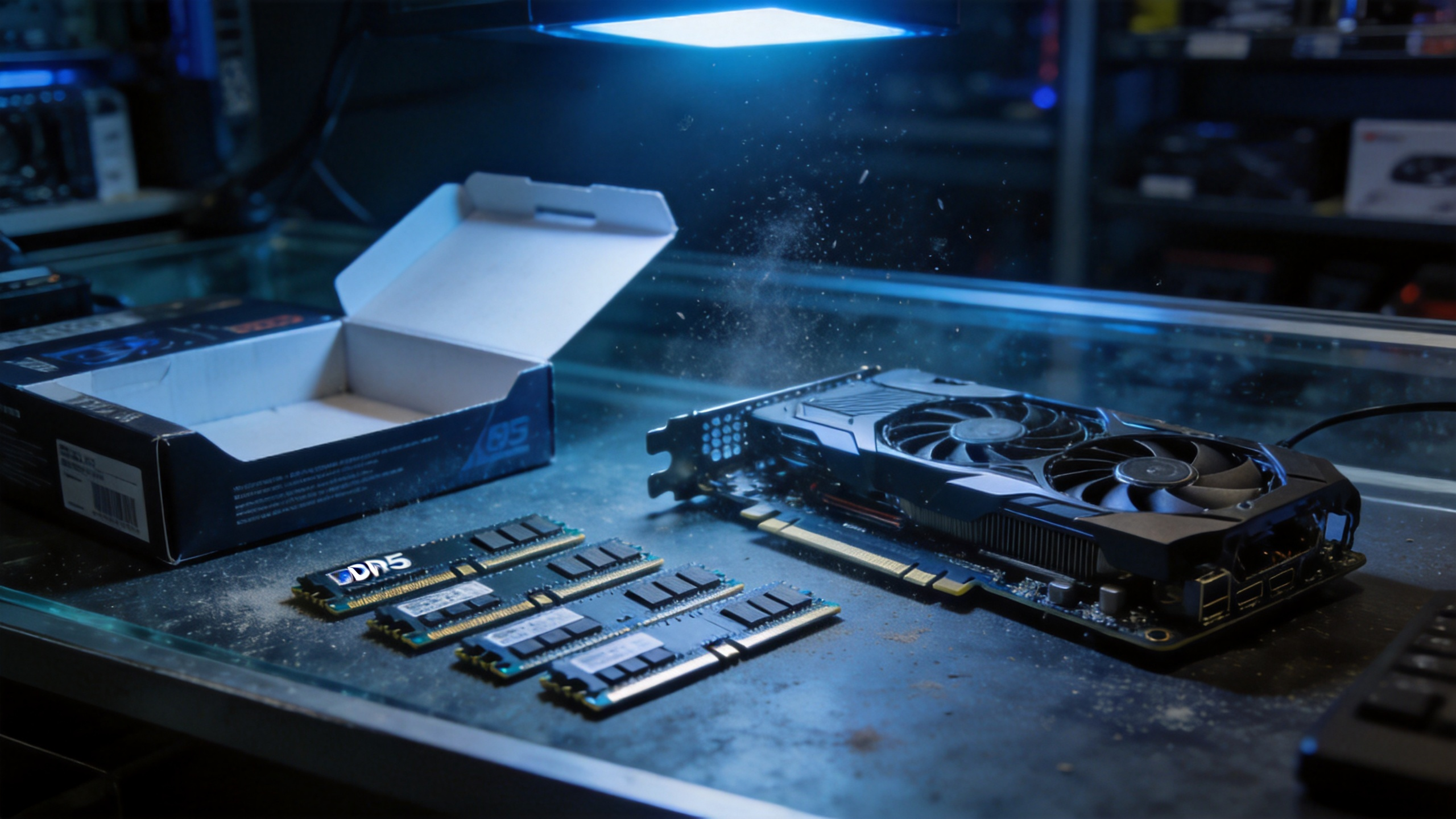
In 2025, console price hikes could still be blamed on exchange rates and tariffs. In 2026 there is no such excuse: RAM, SSDs and GDDR memory have all spiked, the RTX 5080 Super has been postponed indefinitely, and the Steam Machine's rumored price moved from $800 to $950. PC gamers are left with two options — pay now, or wait for a discount that may never arrive. This article walks through the receipts.
一、The Receipts: What Gaming Hardware Actually Costs in 2026
RAM: A 4x jump in two years
A 16GB DDR5 stick that routinely sold for around CNY 300 in mid-2024 now costs CNY 1,200, while a 1TB SSD went from CNY 410 to CNY 950 — both increases of more than 130% (Source: NetEase article on the memory price surge).
Taiwanese retail data is starker still: a 32GB (2x16GB) DDR5 kit climbed from NT$3,000 to NT$13,000 — exactly 4x — and a 1TB PCIe Gen4 M.2 SSD went from under NT$2,000 to over NT$5,000 .
GPUs: RTX 5090 near $4,000-5,000, GDDR7 at $500 a package
The RTX 5090 has been pushed into the $4,000-5,000 range (roughly CNY 28,000-35,000) by memory scarcity and enterprise buyers, and the newest GDDR7 memory packages alone now carry a purchase cost of around $500, with GDDR prices up more than 30% on their own.
Full builds: a mid-range desktop went from NT$36,000 to NT$60,000
A mainstream build — mid-range AMD CPU, RTX 5060, 32GB RAM, 2TB storage — cost about NT$36,000 in August 2025. In 2026 it needs close to NT$60,000. A higher-end RTX 5080 build with 64GB of RAM and 2TB of storage moved from NT$90,000 to over NT$120,000.
二、The Knock-On Effects: Who Actually Pays
Players: "wait for a sale" became "wait for a price hike"
The old rule — buy early and enjoy it, buy late and save — broke in 2026. The same money now buys a tier less performance: a machine that costs CNY 10,000 today performs roughly like a CNY 4,000-5,000 build from two years ago.
Vendors: RTX 5080 Super postponed, Steam Machine repriced
Jensen Huang warned on Nvidia's latest earnings call that game GPU supply would be very tight in the first half of 2026 with significantly higher prices (Source: NetEase). The RTX 5080 Super, widely expected for late 2026, has been postponed indefinitely because GDDR7 costs leave no room for margin. Valve's Steam Machine did not escape either: retail chatter pushed its rumored price from $800 to $950.
Channel: thinner build sheets, and the disappearance of cheap devices
Memory now accounts for up to 30% of a phone's bill of materials, up from around 10%, and the ultra-cheap smartphone tier that depended on bargain storage has effectively vanished from shelves. IDC predicts global PC shipments may contract 9% in 2026 because component costs are simply too high
三、Why It Happened: AI Bought the Wafer Slots
HBM ate the leading edge, consumer DRAM queues behind it
Samsung and SK hynix have shifted production toward far more profitable HBM for AI accelerators, squeezing the DRAM and NAND capacity left for consumers. In Q2 2026, DDR4 prices rose about 50% quarter-on-quarter, LPDDR rose 89%, 512GB NVMe SSDs averaged $126.30 (up 54%), and 256GB UFS 3.1 jumped from $31.00 to $62.70 — an increase above 103% .
This is a structural mismatch, not a familiar inventory cycle
Previous spikes came from crypto mining or channel hoarding; when demand faded, prices fell and cheap used cards flooded the market. This time the buyers are cloud providers queuing up with cash for AI accelerators, and they will not stop because PC gamers complain. The mining-crash script has no cast this time.
四、The Bear Case: Can "It Always Crashes" Still Be True?
Forty years of price history — and the part that got rewritten
Veterans have real evidence: over four decades, memory prices have repeatedly halved, so "it always crashes" is not stubbornness. But earlier downturns followed expansions of general-purpose capacity; when that capacity landed, prices collapsed.
The real variable this time
The question is not whether memory makers will expand, but when AI capital spending slows. Every fab and memory maker is racing to build AI lines, and consumer products get no allocation. As long as AI demand keeps growing, consumer hardware stays tight — though the day training investment cools, prices could fall faster than anyone expects. Betting on the cycle means timing it, and nobody times it reliably.
五、What to Do: PC or Console in 2026
One detail sums up the moment: Remedy's Control Resonant launched on September 24 with official day-one patch notes advising PC players to "disable ray tracing and use DLSS or FSR" for better frame rates . Publishers no longer tell you to upgrade your GPU; they tell you to lower your settings.
If you must spend now, the order of operations is: favour prebuilt systems and consoles, since vendors buy components at better prices and pass hikes on more slowly; don't freeze your budget waiting for a drop; and don't chase the top GPU tier — max out RAM and storage instead, because both double as work tools.
六、My Take: Stop Betting on the Cycle
The worst part of this surge is not the price, it is that it killed the waiting strategy itself. Hardware is a tool, not a bet on market timing: another month of waiting can cost you another price hike. This is not an argument for buying a flagship tonight — it is an argument against basing a decision on "it will fall eventually," which was last cycle's common sense, not this cycle's rule. Come discuss in the Gghubs comments.
七、Frequently Asked Questions
Why are RAM and GPU prices rising together in 2026?
They come from the same supply line. AI servers get priority on HBM and leading-edge capacity, so consumer DRAM, NAND and GDDR memory only get leftovers — in Q2 2026 DDR4 rose about 50% and GDDR memory rose more than 30% .
What does a gaming PC cost right now?
As of September 2026, a mainstream build with a mid-range AMD CPU, RTX 5060, 32GB RAM and 2TB storage runs about NT$60,000, versus NT$36,000 a year ago; an RTX 5080-class build costs over NT$120,000 .
Is the RTX 5080 Super still worth waiting for?
Its launch has been postponed indefinitely because GDDR7 costs make the margin unworkable . Until the supply chain improves, waiting for it is a low-confidence bet.
When will this end?
Realistically, when AI capital spending growth slows. IDC expects a 9% decline in 2026 PC shipments, and some analysts think the memory shortage could run into 2027 or even 2028 .