Reverse: 1999 4.0 Gatekeeper Guide: New Characters and Events
Reverse: 1999 4.0 Gatekeeper version overview
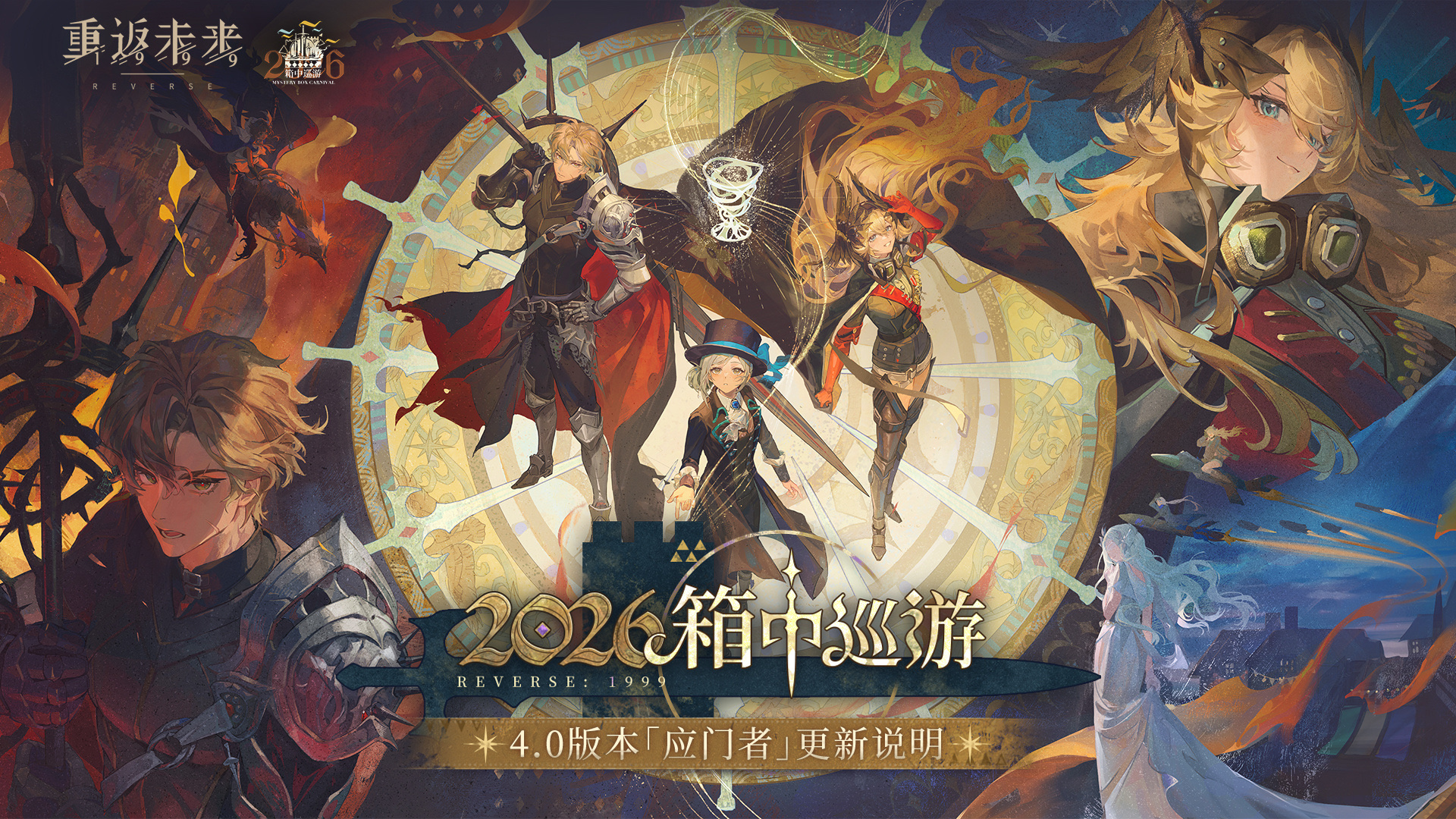
Version 4.0 "Gatekeeper" shipped with the 2026 Box Cruise celebration. The official site lists version 4.0.0 with an update date of 2026.09.24.
Why Box Cruise is the biggest window of the year
Box Cruise is Reverse: 1999's annual celebration patch, and past Cruise versions have consistently brought a Main Story opening, new Psychubes, and a large slate of limited events. The content volume in this window is clearly above a standard version, but whether it is worth your resources still depends on how the new characters fit the teams you already run.
Main story and special episode
The 4.0 story content is Main Story Chapter 14 "Gatekeeper" plus the Special Episode "Ship Parable." Chapter 14 opens the 4.0 story line, while the Special Episode is a standalone side piece. They progress differently: the main story advances by chapter, and the Special Episode typically opens all at once with the version.

Reverse: 1999 4.0 new characters: attributes and roles
The 4.0 additions are the 6-star Huntsworn Lilya (Star), the 6-star Drake (Beast), and a 4-star Beast-attribute character.The 4-star's localized English name was not listed in the sources we could verify at the time of writing, so we refer to it by attribute rather than guessing a translation.
What Star and Beast attributes mean for you
Attribute determines which counter-matchups a character can exploit in Artificial Somnambulism. Star and Beast are different counter directions, which means these cards are not substitutes for each other. They cover different stage environments. Your first filter when pulling should be "which attribute am I missing a well-built main DPS for," not a raw strength ranking.
The Lilya lineage
Huntsworn Lilya is a new form of Lilya, a Star-attribute critical-hit oriented damage dealer whose kit revolves around crit rate and crit payoff. On that lineage, the new form is likely to remain a Star-attribute damage dealer, but exact skill multipliers and passive effects should come from the post-launch official announcement and in-game data. This guide does not fill in numbers ahead of time.
Drake and the 4-star Beast addition
The 6-star Drake (Beast) and the new 4-star character both sit in the Beast attribute. Beast characters cover specific counter environments in Artificial Somnambulism, and 4-star units generally serve as early-game transitions. As above, check the official announcement for exact values.
Reverse: 1999 4.0 story setting: medieval Britain and Camelot
The 4.0 story is set in medieval Britain, built around Camelot Castle and the Lady of the Lake, with the developer broadcast referencing a "Wind Net" trail and a flying witch taking to the sky again.
Arthurian source material
Official posters and the developer broadcast confirm the version draws on Arthurian legend, involving Camelot Castle, the Lady of the Lake, and secrets tied to the "soul." This sits in one of the earlier historical periods the game has covered, connecting to the established occult setting.
Recommended story order
Play Main Story Chapter 14 first, then the Special Episode "Ship Parable." The reason is practical: Special Episodes typically gate on main story progress, so doing it in reverse leaves you stuck at the unlock condition.
Reverse: 1999 investment priority: Insight, Resonance, Psychubes
The underlying investment order does not change with a new version: Insight outranks Resonance, and Resonance outranks Psychube amplification.
Why Insight comes first
Insight raises a character's level cap and simultaneously unlocks new passives and inheritance effects, making it the single biggest jump for an individual unit. Five and six-star characters can reach Insight III, and the third tier often carries a mechanical change rather than a flat stat bump.
Resonance versus Psychubes
Resonance levels up using materials that mainly come from Artificial Somnambulism, while Psychubes improve through amplification. In practice: push your main team's Insight to its current cap, raise Resonance to match team requirements, and only then invest in Psychube amplification. The first two are deterministic returns, and Psychube marginal value depends on the depth of the Psychube pool you already own.
Reverse: 1999 Somnambulism cycle: the 1st and 16th
Artificial Somnambulism and the Reverie rotate on a fixed semi-monthly cadence, and the "Artificial Somnambulism preview" section in past official version notices consistently uses the 1st and 16th of each month as its nodes.
Planning around the 4.0 cycle
If your main team is not finished, adjust to the current rotation's counter attributes rather than forcing a general-purpose team. The enemy Afflatus attribute changes each rotation, and confirming it in advance saves a large amount of trial and error.
Do not leave rewards on the table
Somnambulism is the primary source of Resonance materials, and each rotation's rewards must be claimed in that window. When investment pacing is tight, secure your Somnambulism clears rather than spending stamina on farmable alternative stages.
Reverse: 1999 4.0 resource planning during the celebration
Celebration versions concentrate both the most freebies and the strongest pull temptation. Three criteria handle the ordering.
Count pity before you count systems
Work out your pull reserve against pity before you pull. If the reserve does not cover a full pity, do not split it across two banners. Lock one target and take pity to the end.
Star versus Beast, decided by your roster
The choice depends on your existing attribute coverage. If you already have a built Star main DPS, the Beast 6-star Drake has higher marginal value for you, and vice versa. That beats asking which character is stronger, because Somnambulism's counter environments are what determine how much an attribute gap actually costs you.
Do not miss the celebration handouts
Box Cruise login rewards and limited events typically include self-select items and pull currency.These windows usually run alongside the version, so clear them in week one rather than letting them collide with Somnambulism and story progress later.
Reverse: 1999 FAQ
Q: When did Reverse: 1999 4.0 Gatekeeper launch?
A: September 24, 2026, alongside the 2026 Box Cruise celebration. The official site lists version 4.0.0.
Q: Which characters were added in 4.0?
A: The 6-star Huntsworn Lilya (Star), the 6-star Drake (Beast), and a 4-star Beast character.
Q: What story content did 4.0 add?
A: Main Story Chapter 14 "Gatekeeper" and the Special Episode "Ship Parable."
Q: Where is the 4.0 story set?
A: Medieval Britain, drawing on Arthurian legend with Camelot Castle, the Lady of the Lake, and the Wind Net.
Q: How often does Artificial Somnambulism rotate?
A: Semi-monthly, on the 1st and 16th of each month, per the official notices' Artificial Somnambulism preview sections.
Come discuss in the Gghubs comments.
Action checklist
- Clear Main Story Chapter 14 before starting the Special Episode "Ship Parable" content.
- Calculate your pity reserve first and lock one pull target rather than splitting across two banners.
- Pick Star or Beast based on the attribute gap in your roster, not on tier lists.
- Push Insight on your main team first, then Resonance, then Psychube amplification.
- Adjust your teams to the current Somnambulism counter attribute and claim rewards in-window.
- Clear Box Cruise login and event rewards in week one of the version.